
Actor Demian Bichir Reflects On His Oscar Nomination and How A Better Life Has Aged in the Trump Era
The actor also discusses his new feature directed by Angelina Jolie, "Without Blood."

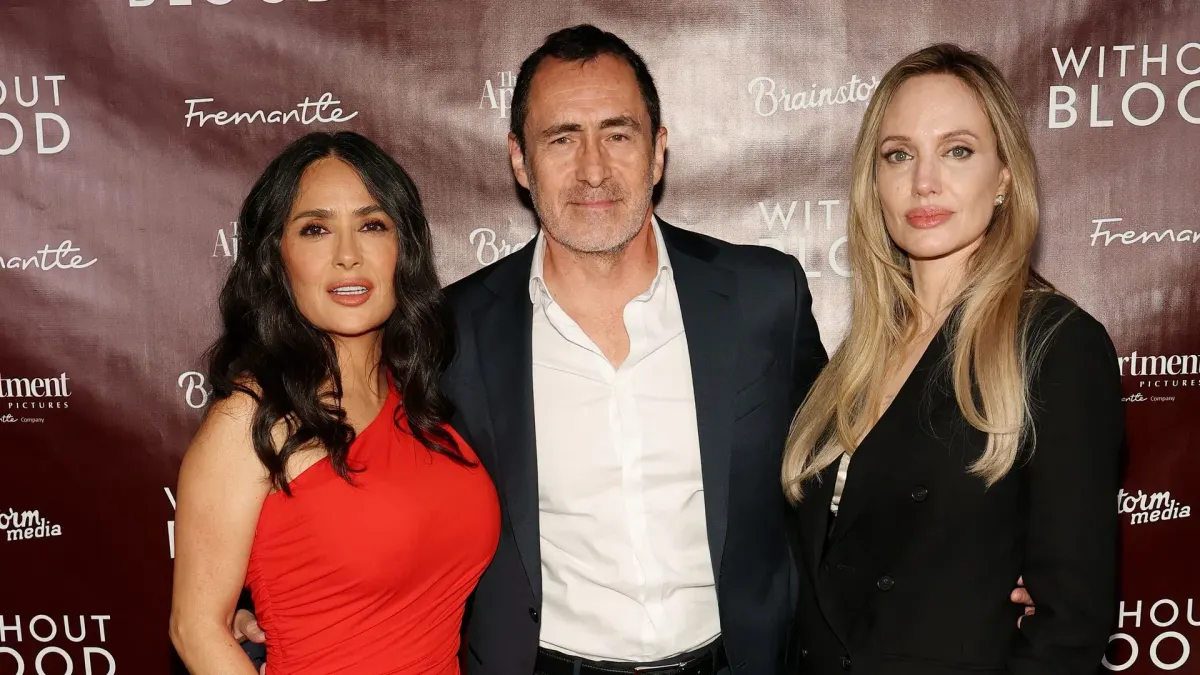
A portion of this is available for free subscribers, but the full article is exclusive to my Gold Star Crew members.
🌟Supporters like: Talleri Mcrae, LMoore, Tonia Steed, Chelsea Meister, Josh Hornbeck, Julia Mazza, Kathia, Alcmatta, Kevin Turner, Cassidy Dimon💫
Members get access to exclusive articles, 1:1 mentoring on breaking into the industry, swag, and. Learn more and invest today!
Become a paid subscriber and join the community that supports independent journalism, free of AI and influencer opinions!
There is something akin to watching a stage play while viewing director Angelina Jolie's latest film Without Blood. The movie, focuses on Tito and Nina (Demian Bichir and Salma Hayek, respectively) and how their lives have intersected over decades, is told nearly exclusively through monologues. Bichir and Hayek sit at a table, reminiscing and telling stories across from each other.
Considering actor Demian Bichir's past work on the stage, it's no surprise he works with the material's theatrical, stage-y quality.. For Bichir, unlike other movies where an actor is meant to be active, here the emphasis was on sitting and quiet. "My theater background comes in handy under any circumstance, and for any project, at any given time," he tells The Film Maven. It's always present. That's what I did growing up, and I still do. It requires pretty much everything from you."
This is one of two Angelina Jolie films out this year, the other being her performance in Alice Winocour's Couture. Unlike that film, where Jolie was a performer, here she is both director and screenwriter (adapting Alessandro Baricco's novel). "She's fearless," said Bichir. "She flies solo, and you don't find that very often." By that, Bichir explains that on most sets there are dozens of people behind a monitor, or giving notes. Directors can often have a team of people working alongside them, not so here.
"You very rarely find that freedom," he said. "I saw that freedom with Robin Wright when she directed Land." It's something he specifically finds with actors who director, or directors who also act, like Quentin Tarantino, George Clooney, and Andy Garcia. "We trust them," Bichir said. "We actors have a BS radar, so we detect easily when something is out of place. Angelina was so sharp and so clear about whatever she needed." What struck Bichir the most though was the mood Jolie set up on a set. "The atmosphere for us to feel free, and to feel brave, and to explore in any direction. She's so calm [and] we were lucky to have that calmness because that comes from the top down. If you are cool and respected, and respectful and loving and generous, everything works very nicely."
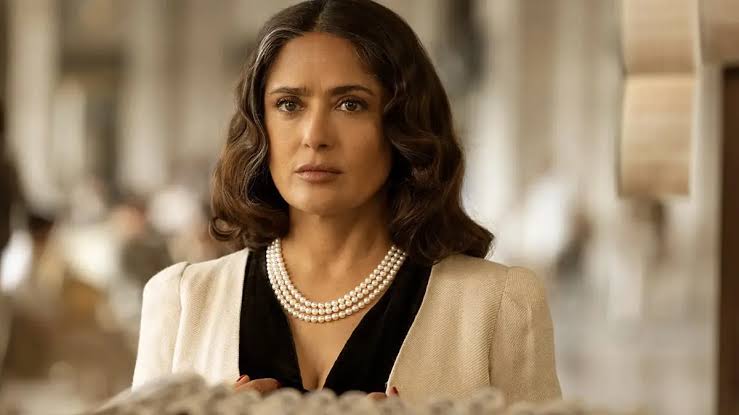
He's complemented by Salma Hayek as a scene partner, whom Bichir has known for nearly forty years. "You're only as good as the actor you perform opposite," he says. "If I'm any good in this film it's because of her." The two hadn't seen each other in a minute, Bichir explains, and the early days of filming allowed them the opportunity to reconnect, talking about their lives, their children, and generally what they'd been up to.
"But when Angelina said action, I saw Nina," Bichir said. "I didn't see Salma. I saw this character. I wish you and everybody who watched the film would have been right there in my place, sitting right in front of her to see her so closely, and to feel her and to breathe her, and to see this world happening inside. There was nothing else. She didn't dance. She didn't sing. She didn't do anything else. She didn't stand up. Just there lighting a cigarette once in a while, sipping wine. What happened to this beautiful character you could see in her eyes, and that's exactly what people get. It was very easy for me to just react to her."
The best part of my interview with Demian Bichir is waiting for Gold Star Crew members. Unlock the full interview ⬇️
The movie's central premise is, like the time implies, that not all wars involve extreme violence. As Jolie lays out, sometimes long-standing wars are the result of differing ideologies, miscommunications, and rumors. "This film happens in a very specific place and time with very specific characters, but it's a reflection of us," says Bichir. "It's a reflection of the world, and it's a reflection of many different battles that we face daily, and different wars that we need to win. Stupidity goes around like it's floating in the air. So, to me, the main element here is how we find redemption through forgiveness and through accepting the wrongdoings. And there is there is a big lack of that. People are not taking responsibility [for] their own wrongdoings. That's number one that we need to do in order to stop stupidity."
Of course, discussion of politics brings up Bichir's Academy Award-nominated role in the 2011 film A Better Life, where the actor plays an East L.A. gardener in the country illegally. "It's a lifetime," says Bichir when hearing about how much time has passed since the performance. He jokes that while it's his only nomination at the moment, he's hopeful it's not his last. "Chris Weitz [director] made this possible, and made the whole thing possible. It was because of him that I have a career. That I got that nomination. That I got that beautiful role."
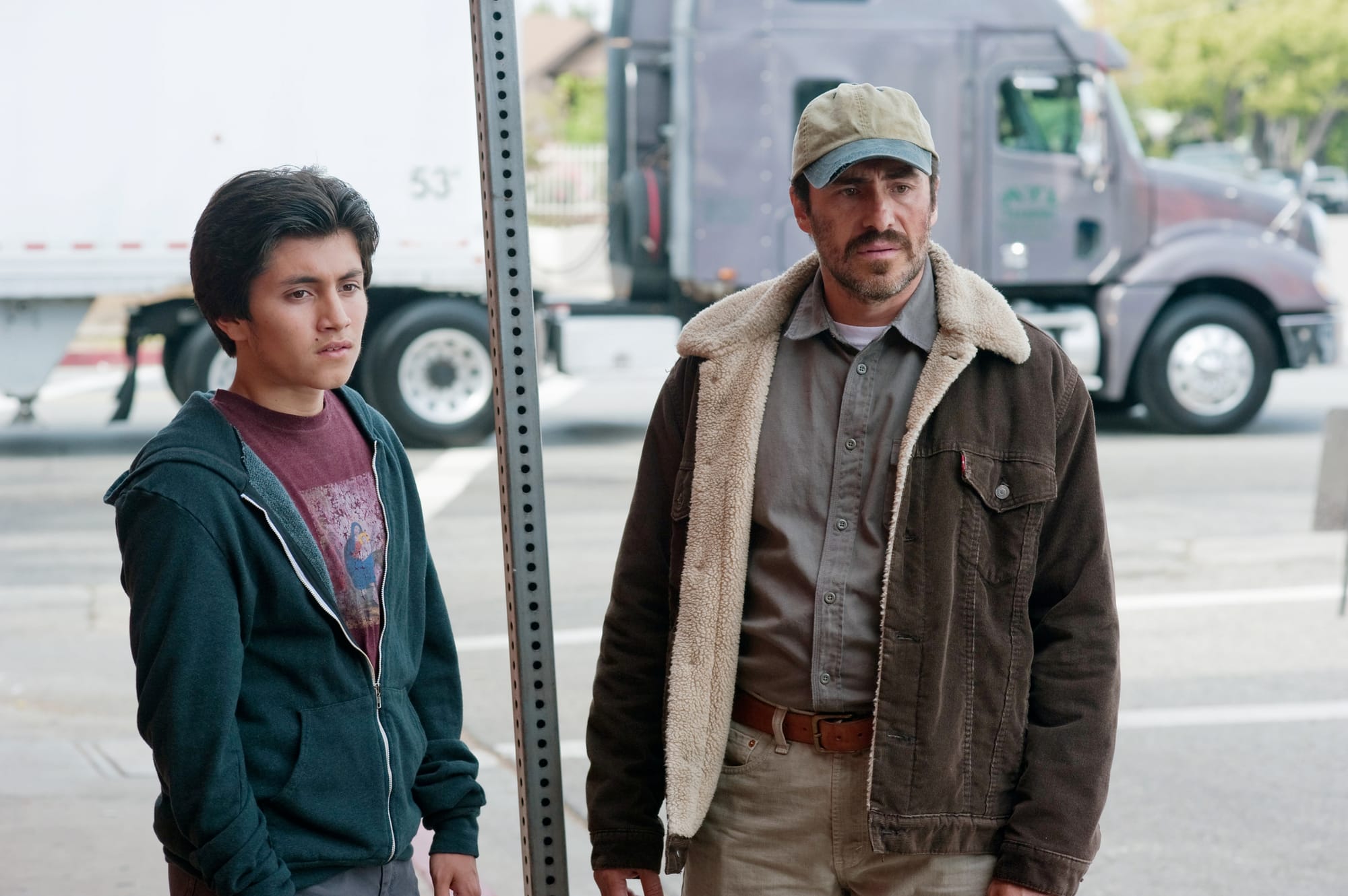
Yet Bichir understand it's impossible to not see how relevant A Better Life remains today in the wake of Trump 2.0. "We're still facing that same story," he says. "Now we have this brutality, this terrorism performed by ICE, which is only part of the same double standard speeches that we get daily from politicians from both sides. This is not really getting any better. It's the lowest level of humanity that we have ever encountered. This is bad karma for all the people who are performing these terrible acts. You put kids behind bars, children. You lock up children. When we become that inhumane then all kinds of terrible things can happen."
It's not unlike Without Blood, Birchir lays out. "It's just like in the film," he says. "It doesn't matter what you say. There's nothing that can justify this. There's nothing that anyone can say that justifies this atrocity. It's a human catastrophe. Since we're still telling those stories, what does that tell us?"
 Kristen Lopez
Since that life-changing award fifteen years ago, Bichir has gone on to do almost every genre of film. (We joke that he still needs to do a musical.) Since that time he admits that there are certainly more options for him, in terms of roles, than their used to be. And with that comes a changing in his priorities on how he picks them. "Right now, the main name of the game is to say no and to continue to say no," he says. "There [aren't] great stories out there and it used to be more. I used to have that chance of choosing between this and that but right now, what I've been doing more and more is saying no to projects that are filled with cliches, and stereotypes, and same stories, same names, same lines, same everything. Stories that I'm not interested in telling. Once in a while come these beautiful things like Without Blood or the series that I just finished shooting for Amazon called Delphi. It's a beautiful story about boxing but it's basically about family, about reconnecting with your loved ones. These types of jewels come in rarely."
Without Blood is in theaters Friday.