Hamnet Review: Chloe Zhao's Shakespearean Drama a Showcase for Jessie Buckley
Paul Mescal tries to hold his own but this is Buckley's show.

This post is free but it’s worth it to become a paid member of The Film Maven community! Paid subscribers are the backbone of The Film Maven who support independent journalism, as well as female- and disabled-created content. Paid Film Mavens get access to two-three exclusive articles a week including access to my series The Trade and Popcorn Disabilities, as well as the ability to chat with me on The Film Maven's Discord server.
Don't want to commit to a subscription? Leave a tip to show you enjoy what you're reading.
Are you a Film Maven subscriber or reader? If so you've probably already gotten my email asking to fill out this year's reader survey to help me find out what worked and what I could improve on in 2026. If you haven't filled out the survey yet consider doing so at this link!
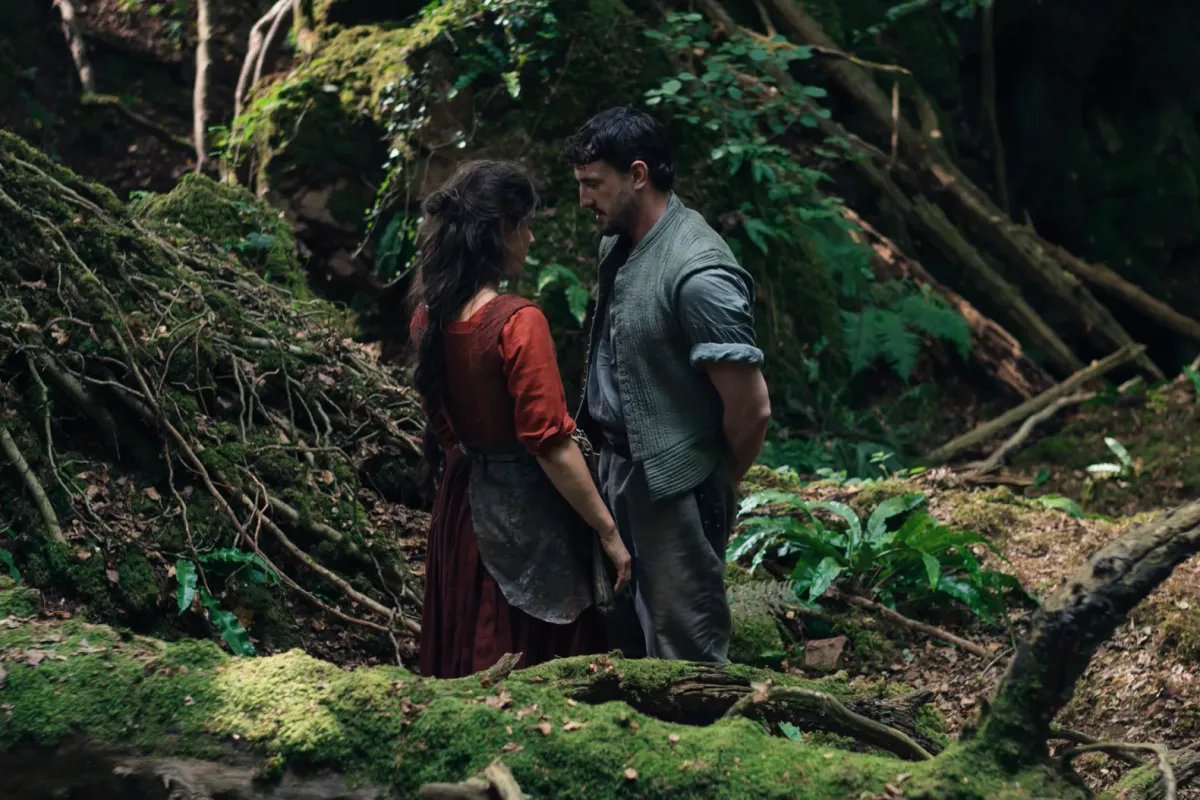
There are moments in Hamnet that look like you're witnessing an artist paint in the 1600s. These perfectly composed images, many of which illustrate the sublime awesomeness of nature that have the power to engulf the viewer. The sheer size and weight of the untamed wilderness contrasted with the small human standing within it. It's certainly enough to remind us how minuscule and insignificant we are in the scheme of things. And yet, part of director Chloe Zhao's thesis within Hamnet is how the power of art has the ability to transcend and be just as immortalized and everlasting as an oak tree.
Hamnet certainly won't do anything to dispel Zhao naysayers. It's slow, it's quiet, it's contemplative and meditative. And yet where her previous features often feel so nomadic as to be on a quest for a story, Maggie O'Farrell's script–based on her own novel of the same name–is Zhao's North Star, making it her most accessible feature. For Hamnet isn't just another stock "Shakespeare was a genius" story where the goal is to illustrate how his brilliance through the creation of a play. It is the story of grief, and how, as the adage goes, creatives take a broken heart and turn it into art. More specifically, it's about how two people attempt to deal with their trauma, one of whom just so happens to be the Bard.
Will (Paul Mescal) meets Agnes (Jessie Buckley) as the Latin teacher to her stepbrothers. Almost instantaneously, Will believes he's destined to marry Agnes regardless of the stories that she is the "child of a forest witch." Their marriage marks the beginning of their fraught relationship, one filled with as many blessings as it does tragedies. As Will becomes more enmeshed in his writing, building his success as a playwright, it leaves Agnes alone to raise their children, leading to resentment, particularly as the Black Death invades the city.
Fiona Crombie's production design immediately sets the tone for Hamnet. The cold stone and warm hearths that are part of Agnes's family home give way to the wild and untamed wilderness she finds comfort in. This is a story as much about magic as it is faith. Agnes is seen as a witch, something her deceased mother welcomed her into, because she has knowledge of the local plantlife and finds more community wandering in the woods than interacting with others. The canvas is painterly in its composition, enhanced by soft lighting and a muted color palette.
It's in this world that Agnes and Will first meet. He believes she's a servant girl because of both how dirty and rumpled she is, as well as how her family treats her. The two play with an illicit romance but immediately understand they're meant to be together; Agnes gets pregnant fairly quickly as a means of forcing everyone's hand to allow them to marry. But what rests inside O'Farrell's script is not just their love for each other, but their love for creativity. Agnes demands Will tell her a story that "moves him" and he lays out the Greek tragedy of Eurydice and Orpheus.
Unlike other Shakespeare narratives, the Bard takes a backseat in this story, though Mescal still makes the character pop. His retelling of the Orpheus myth is filled with passion and intensity. Mescal isn't just reading lines from a script, but believes in the story with his whole being. And yet he also has a childlike immaturity that runs underneath the character seen in the way he grins wide as he explains how excited he that Agnes is pregnant and they want to marry, to the horror of his family, or in the way he plays with his son Hamnet (Jacobi Jupe).
Mescal and young Jacobi Jupe are fantastic. Jupe, specifically, has a hard role, playing the character who gives his namesake to one of the most famous protagonists in all of literature. Jupe has to thread the needle between inquisitive child and the presumed "man of the house" as Will goes off to make his way playwriting. You see the pain in Mescal's eyes as Will knows he has to leave his child, but it's nothing compared to the hurt that rests in Jacobi's. Hamnet is the character that, literally, the movie is about and yet the boy has to play a character who doesn't know what his life will bring him.
But all of them step back when Jessie Buckley is on the scene. Buckley is Hamnet's beating heart, it's warrior. She has such a ferocity to her and an ability to dominate that's breathtaking to see in execution. We see this as she drags herself into the woods to give birth, embracing being the witch of the wood and breathing new life into it. From there, Buckley's Agnes has to be the mother, father, protector of the family. Too often movies about genius focus on the man, while the worried wife waits at home to nag him. Here, Agnes may not have the acclaim and longevity of Will, but she is the true breadwinner of her family. When the plague arrives, it is on Agnes to save her children, and the viewer can't help but embrace her and turn away from Will when he does finally show up.
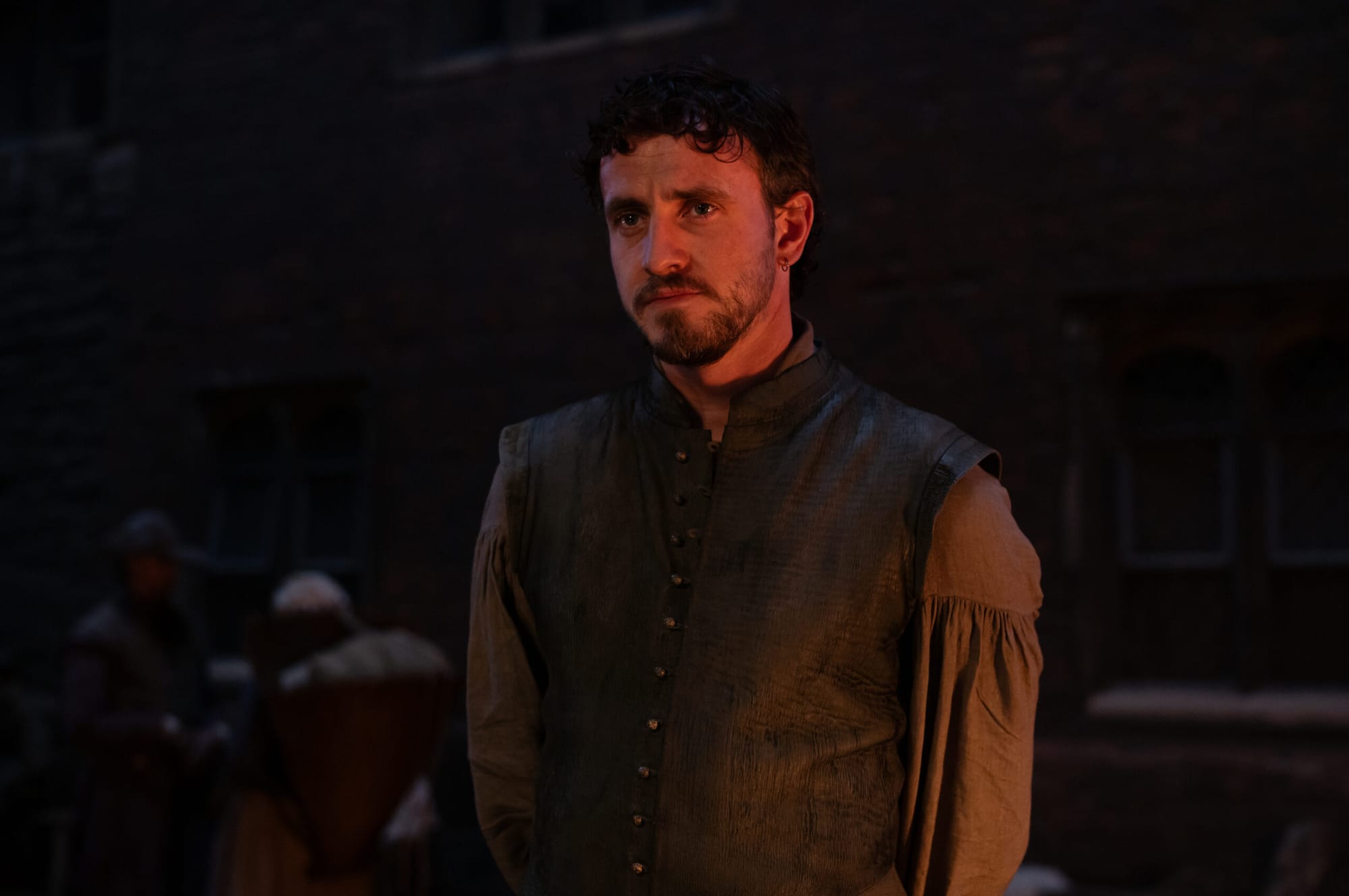
Hamnet's second half soon becomes a meditation on grief. How and why we're resistant to it, and how it can manifest in unexpected ways. Agnes's grief is overt while Will retreats inward. When Agnes finally goes to see Will in Stratford she's shocked that the most successful playwright in England is living in a one-room attic space. Is it mad genius? Or his belief that he should punish himself for what he's put his family through?
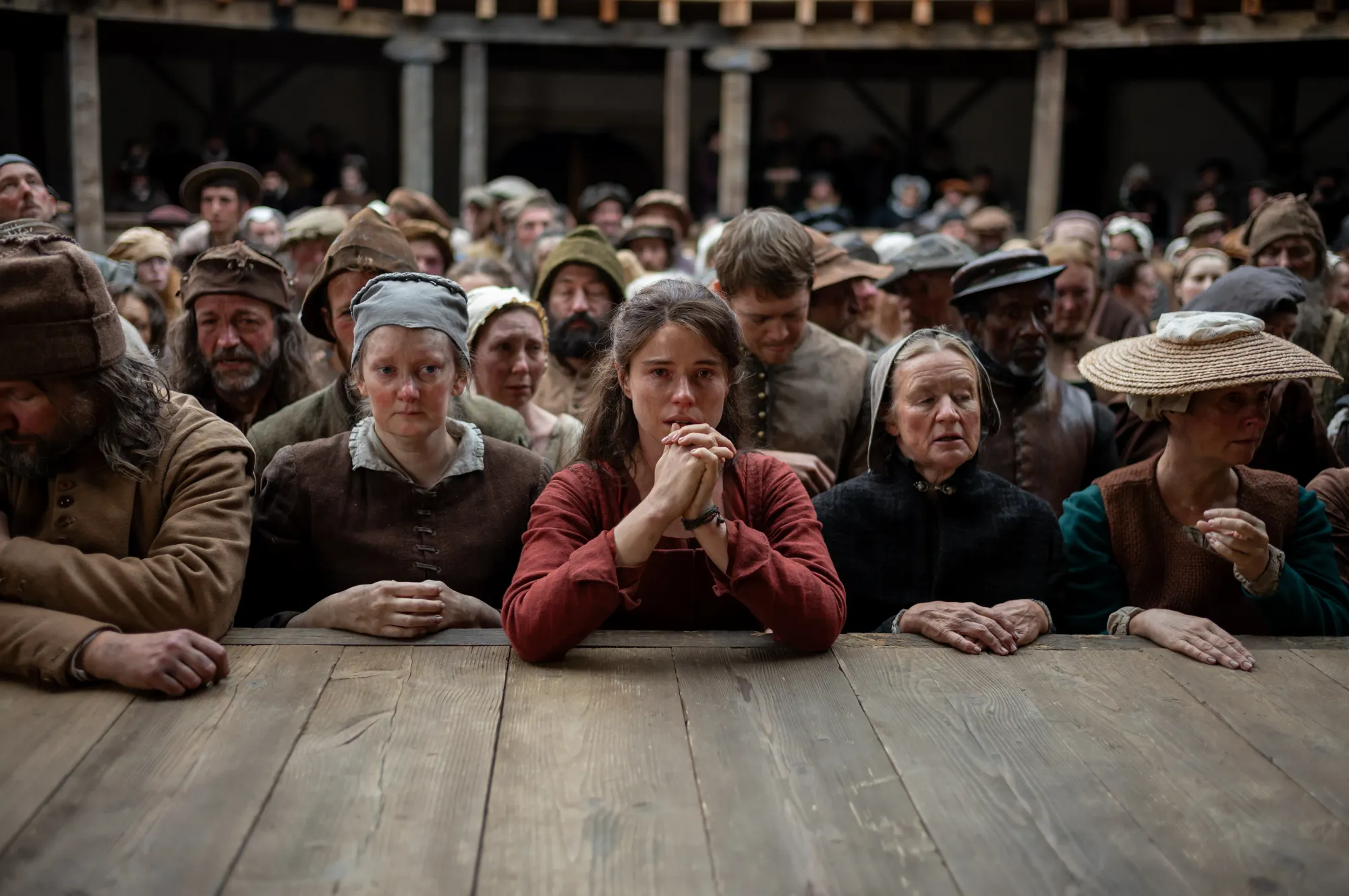
The eventual performance of Hamlet (an opening text crawl says Hamlet/Hamnet were interchangeable at the time) is where all of Zhao's themes she's established in the film collide. Buckley and Mescal are finally able to inhabit the same space, both feeling utterly changed about their circumstances from where the movie started. Noah Jupe arrives as the actor playing Hamlet–no surprise that he's the elder brother to actor Jacobi Jupe–and it is fifteen minutes of pure cinematic wonder. Buckley goes through all the stages of grief in the presentation of the play, culminating with the camera on her face as she watches Hamlet enact his final death scene.
Hamnet is another slow burn from Chloe Zhao, but when it really unleashes its magic it's an unstoppable force enhanced by Jessie Buckley's performance. A beautiful examination of mourning and artistic catharsis.
Grade: A-
Hamnet is in theaters December 5.
Are you a Film Maven subscriber or reader? If so you've probably already gotten my email asking to fill out this year's reader survey to help me find out what worked and what I could improve on in 2026. If you haven't filled out the survey yet consider doing so at this link!
My new book Popcorn Disabilities: The Highs and Lows of Disabled Representation in the Movies is out now! Buy a copy wherever you get books!