Scream 7 Forgot Some Fundamental Elements of the Franchise, and It Needs to Bring Them Back
Remember when these movies had something to say about the horror industry?

This post is part of The Film Maven free week! All week you'll be reading a mix of posts that include what paid subscribers get regularly! If you can't commit to a subscription consider leaving a tip to show you enjoy what you're reading.
Paid subscribers are the backbone of The Film Maven who support independent journalism, as well as female- and disabled-created content. Paid Film Mavens get access to two-three exclusive articles a week including access to my series The Trade and Popcorn Disabilities, as well as the ability to chat with me on The Film Maven's Discord server.
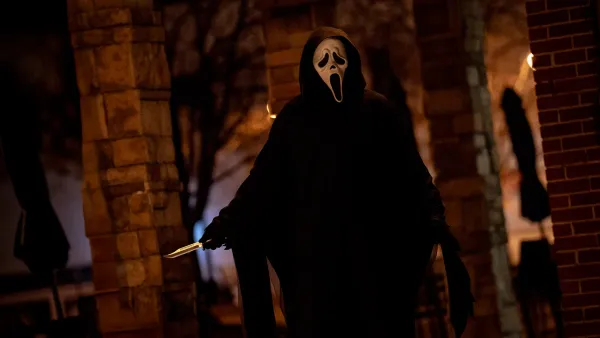
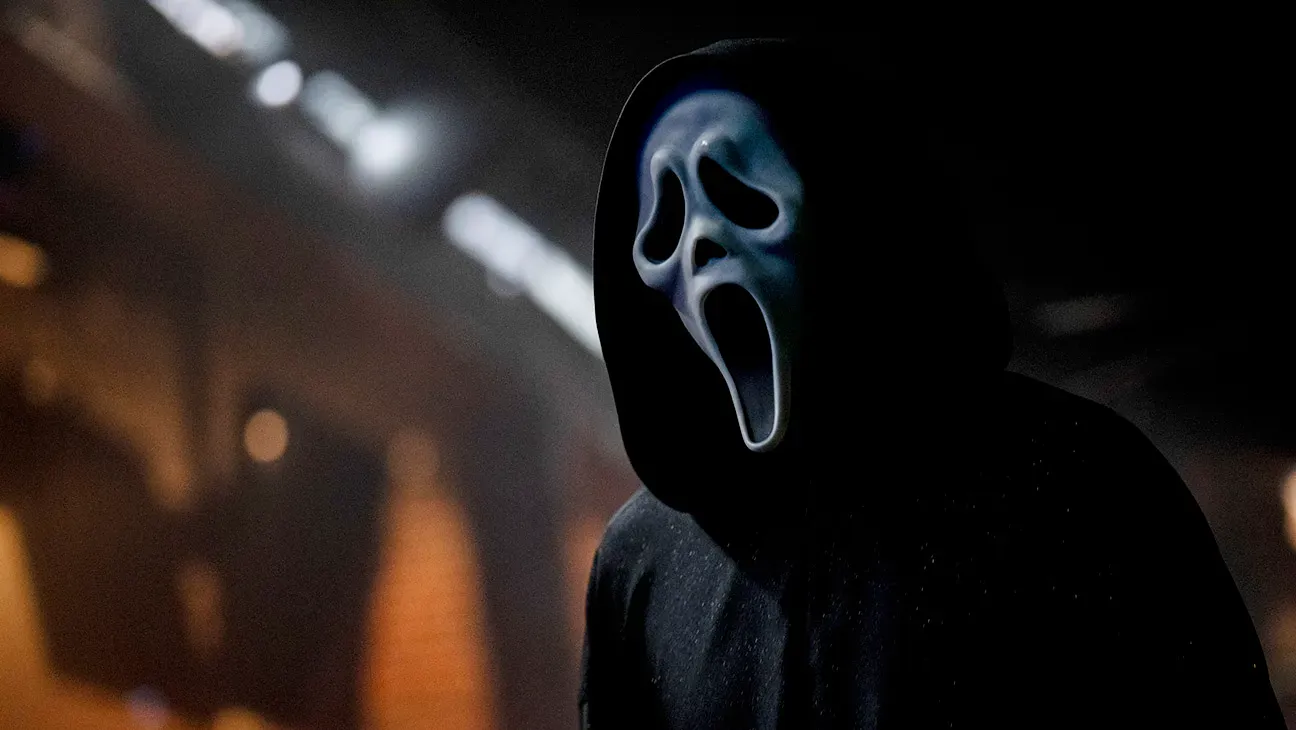
There was something I couldn't help but notice while watching Scream 7. Or at least when I wasn't rolling my eyes at the messy script. It was how infrequently we heard voice actor Roger Jackson, the iconic voice of Ghostface, throughout. Alongside that, the movie eschewed the "rules" or really any commentary on contemporary horror, the Stab franchise (the series' film with the film), or Hollywood in general.
For a series once at the cutting edge–pun intended–of the horror genre, has become another face in a crowded swimming pool of killers and stabby objects. When did the Scream franchise turn away from the meta universe it lived in and just become a regular ole slasher film?
So, if the Scream franchise plans to come back for an eighth round–and signs certainly point to that being a foregone conclusion–I'd like to take a cue from Randy Meeks (Jamie Kennedy), Woodsboro's resident horror movie junkie, and suggest the franchise go back to its roots. Not to Woodsboro, per se, but the fundamentals of what made the franchise once feel so fresh and new.
Spoilers for Scream 7 below.
The Voice of Ghostface (aka Bring Back Phones!)
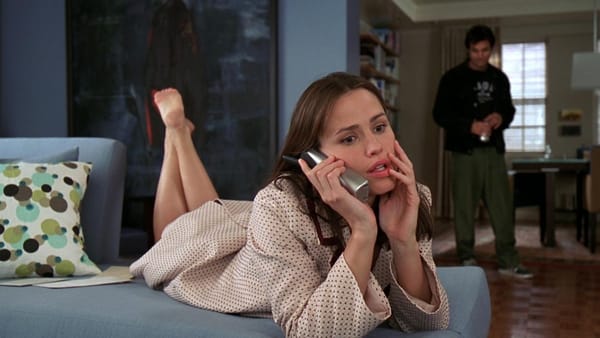
I recall seeing a tweet in the wake of Scream 7's release talking about how much the Scream franchise owed to coming out before the worldwide domination of cellular phones. There's something that's frightening, to those who were there, to realize someone had a way to call you, and you had no idea who it was. Scream 2 acknowledged the arrival of Caller ID and Scream's 3 and 4 were cellphone heavy, but it's the phone element that remained important. The idea that our victims had tangible contact with something intimate about the killer, his voice.
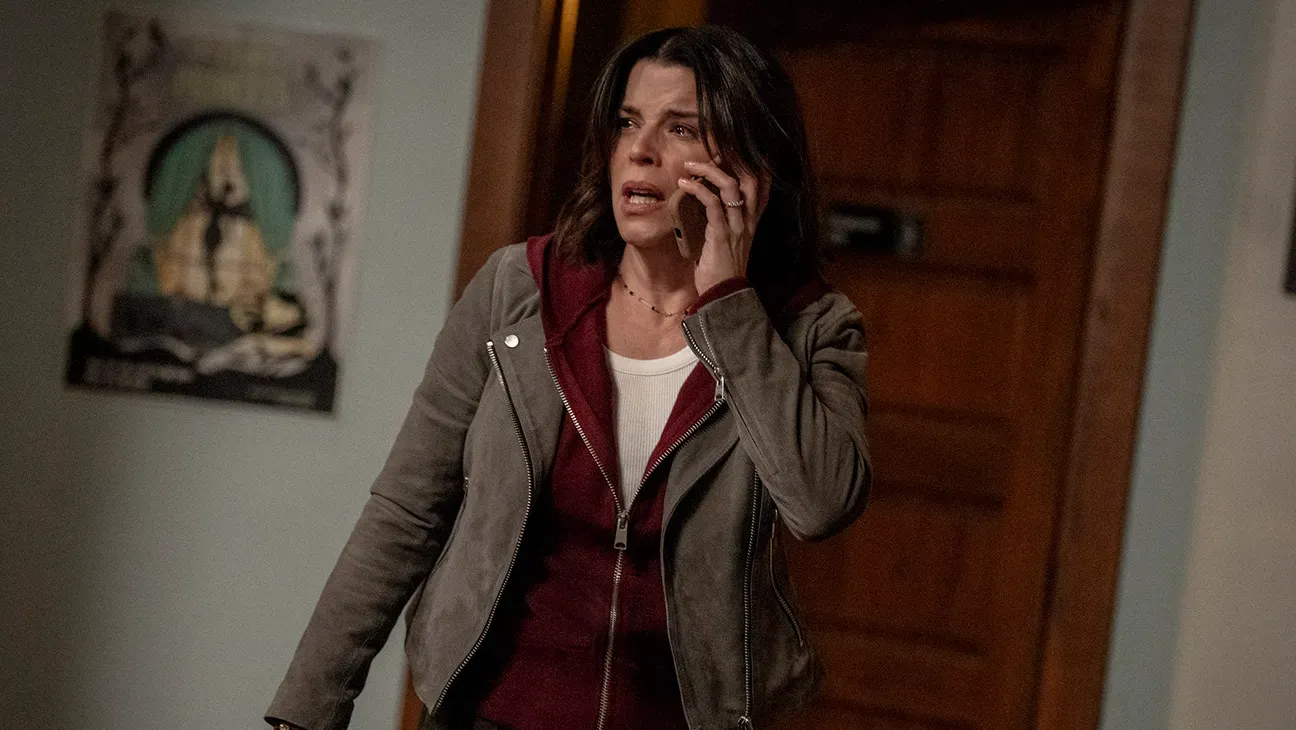
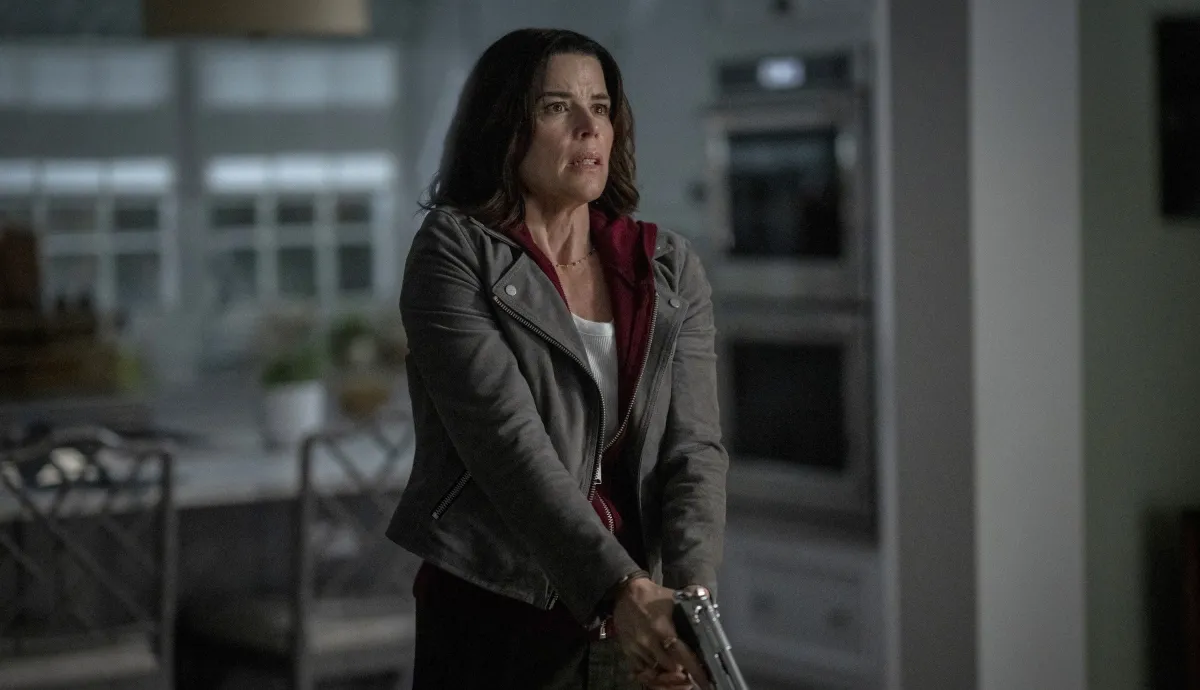
What's funny is that, even with 911 being a tap away – we've come far from Neve Campbell's Sidney chat rooming the authorities – the usage of phones doesn't just nuke the stakes of the movie, but also just seems to fill the runtime in Scream 7. The phone has never been more omnipresent, yet superfluous. Sidney uses it to search for things, Facetime with deepfake Stu Macher (Matthew Lillard), even direct her daughter Tatum (Isabel May) on how to kill Ghostface because she can watch her on the cameras placed in her coffee shop. The phone is now less a tangible connection between Ghost and the characters, and a video game controller that simply moves everything along.
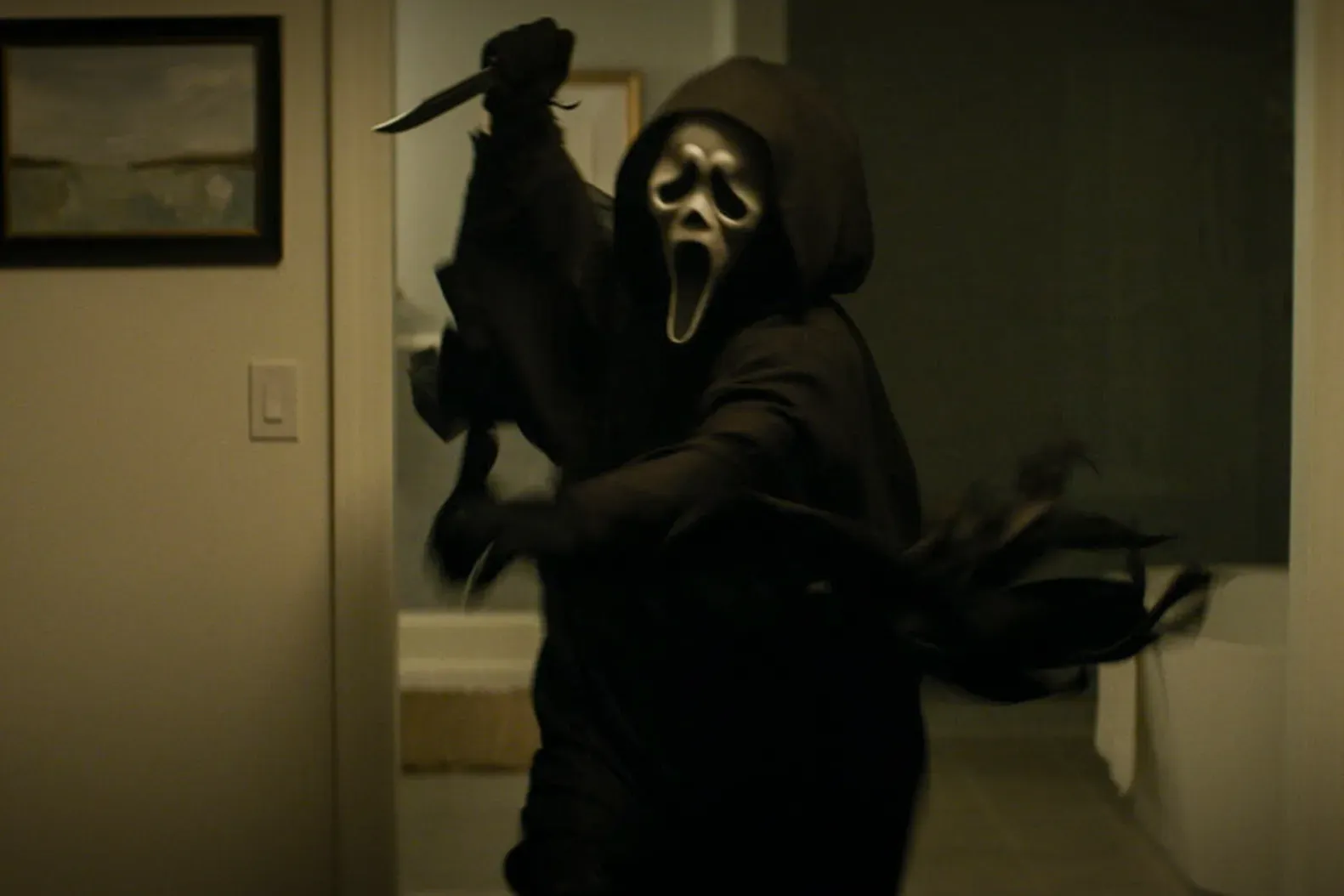
Jackson's vocal performance never gets enough love, and his absence is palpable for those who not only enjoy the original quadrology, but even the first two movies. It's the interrelationship between the phone coupled with Jackson's voice. The belief that the character didn't know who the killer was, but that he had a unifying voice is what enhanced the world that is Ghostface. Ghostface, more than the mask, is the voice. Take that away and you have a generic killer.
Don't Be Afraid to Be Inside
When Scream debuted in 1996, a lot was written about the movie's meta elements, something director Wes Craven had already toyed with previously with the 1994 Nightmare on Elm Street installment, Wes Craven's New Nightmare. The movie's self-referentiality and references to other movies had a lot of people written about it as post-modernist.
As Valerie Wee writes in "The Scream Trilogy, 'Hyperpostmodernism,' and the Late-Nineties Teen Slasher Film," "...referencing in the Scream trilogy is distinctive because it is not restricted in this way, to occasional, passing allusions confined to the level of subtext. Instead, a significant proportion of the intertextual referencing in the Scream films functions as text."
The majority of the movies have continued to play with that, though Screams 5 and 6, with their jumpstarting of a new franchise, felt like they were moving away from that. Part of this, in my opinion, is that horror has become such a wide-spreading genre, with so many subgenres, and various levels of reverence. There feels like there are less unifying "accepted" slasher movies, with diehards of the genre knowing far more than the average viewer. This is in contrast to what felt like a smaller pool of slashers to work with (Leatherface, Jason, Freddy, Michael Meyers) than in years past. So, because of this, there's been little critique of what the horror landscape, or even film looks like.
When Mindy Meeks (Jasmine Savoy-Brown) is chastised in Scream 7 for bringing up the rules – and even then she doesn't even really lay anything out – it's a moment that implies that they're unnecessary, dated, and don't fit. Yet the movie offers us nothing to replace them. There's not even really a desire to discuss that there's nothing to replace them! Instead, it's an acknowledgement that everyone with a brain knows the tenets of a horror movie. This was done better in another movie from last year, Sinners. For me, it was so refreshing to see a movie where someone understands vampires exist and how to kill them. No one has to stand there and be like "what are vampires!"
So, how does a Scream movie, part of a franchise that has always been self-aware, stand out if it no longer understands what makes the horror landscape what it is? Part of why Scream 3 is divisive is that it started moving away from the horror genre and started to go bigger, getting inside baseball about the Hollywood system and the real-life horrors within (and calling out Harvey Weinstein to his face). If the Scream franchise is already so self-aware it doesn't even want to talk about the cinematic world around it, then it just becomes stock, or in this case copying other movies.
Apparently, Halloween Ends – the movie I cited in my review did a lot of what Scream 7 does and I hate both – is more beloved than it was when it debuted. But I think both movies do hold commonalities in what do you do when a movie gains sentience and can't seem to find something to discuss alongside itself. Like that film's heroin, Laurie Strode (Jamie Lee Curtis), Sidney Prescott is just left to try to deconstruct her trauma with no discussion of how discussing trauma is now a cliche part of horror movies. (Boy, do I wish that had happened!) Instead, Anna Camp's generic Jessica, Sidney's "best friend" and our new Ghostface, is the one who, in a parasocial relationship with Sidney, wants to kickstart a new franchise with Sidney's daughter as the heroine.
Outside of Jessica apparently not understanding the movie's own history – she tells Tatum she's going to watch her mother die like Sidney watched hers which.....didn't happen – the movie also seems to forget Scream 4's Ghostface: Jill Roberts, Sidney's niece. Like Jessica, Jill also wanted to kickstart a new franchise, albeit with her as the lead, and felt that Sidney was just too prominent a face to keep on living. Williamson has talked about originally wanting Jill to live and take on Sidney's mantel, knowing she was also a Ghostface killer. It makes me wonder if, at one point, bringing Jill back might have been the original intention?
Is the Stab Franchise Really Most Sincerely Dead?
The inside Hollywood mentality of Scream also makes me wonder: what happened to the Stab franchise? What was always fun about Stab, the franchise that mimics and tells the Hollywood-ized story of Scream, was what a direct commentary it was making about how violence and horror are glorified.
As I wrote in an extended piece on the Stab movies within Scream, "What Craven does with Becker's character in Stab is utilize her to pointedly illustrate the sexism that runs rampant against women in horror. Where Casey Becker in Scream was a tragic victim who, in just a few scenes endears herself to the audience, Stab’s Becker is a sex object and nothing more. When the phone rings for Casey in Scream it’s a moment of suspense and dread. For Stab 2, the audience in the fictional theater groans because they are denied a glimpse of the actress naked."
If the Scream franchise feels there's nothing to discourse on about horror, they can at least examine it through the fictional film series presumably running as long as this movie has. Resident crime junkie Lucas (Asa Germann) brings up how Woodsboro has been documented in podcasts and Netflix crime documentaries. This movie seems more content to foist the crimes onto real life than the fictional Hollywood within it, continuing to move away from satirizing its existence. It'd be great to examine what a Stab reboot would look like? How does it get the Netflix crime documentary treatment? Or a Ryan Murphy-esque limited series?
All of this is to say, the Scream franchise needs to dig deeper than just being a slasher film with an awareness that other slasher movies exist. It treats its audience as smart enough to know how to survive a horror movie, but doesn't want to go any deeper than that. I'd love the Scream franchise to get back to basics. Or at least not make a movie as bad as Scream 7 was.
Drop in the comments below: What do you think the Scream franchise needs to reinvigorate itself?
This post is part of The Film Maven free week! All week you'll be reading a mix of posts that include what paid subscribers get regularly!