The Bride! Review: This Bonnie and Clyde-Esque Monster Is a Wild Ride
The script suffers from some underdevelopment, but Buckley and Bale are pure magic.

This post is part of The Film Maven free week! All week you'll be reading a mix of posts that include what paid subscribers get regularly! If you can't commit to a subscription consider leaving a tip to show you enjoy what you're reading.
Paid subscribers are the backbone of The Film Maven who support independent journalism, as well as female- and disabled-created content. Paid Film Mavens get access to two-three exclusive articles a week including access to my series The Trade and Popcorn Disabilities, as well as the ability to chat with me on The Film Maven's Discord server.
Director Maggie Gyllenhaal's The Bride! doesn't care what you think about it. What unfolds over its 126 minutes is nothing short of a brash, feminist rallying cry that simultaneously crafts a compelling antiheroine while mourning the litany of dead women cast aside by bad men (and society) over generations.
Anchoring it all is a luminous performance by Jessie Buckley, in a dual role, that hearkens back to the classic elegance of Old Hollywood. It's a tale so magnetic it helps step over some of the bigger storytelling flaws that point to potential studio interference and a longer cut somewhere out there.
Gyllenhaal loves thorny stories, and even pricklier leading ladies. Her 2021 directorial debut The Lost Daughter would make a great companion piece for this. Unlike Guillermo del Toro's own Frankenstein movie, Gyllenhaal's tale weaves itself out of whole cloth, setting itself in 1936 Chicago.
Our story is introduced by Mary Shelley herself (Buckley), trapped in some form of purgatory where she racks her brain to figure out how to tell a sequel to Frankenstein. It's an utterly bonkers introduction, with Shelley spouting all manner of coarse language, that situates this story in a land where Shelley is keenly aware of the monster she's wrought, though it's never 100% specified whether this world sees Frankenstein exist as a feature film or not.
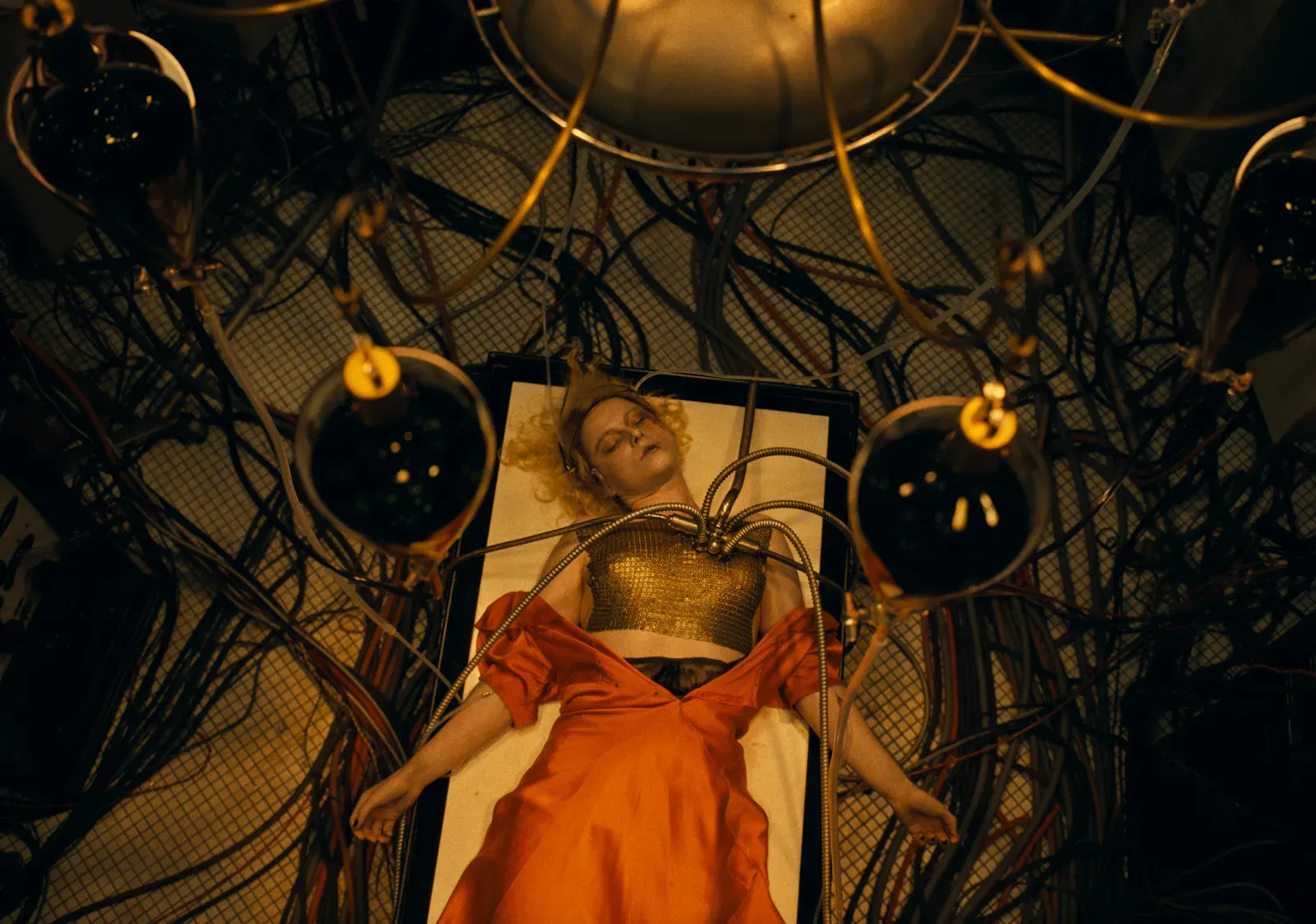
Ida (Buckley, as well) is a random woman Shelley picks out to inhabit her new iteration of the Bride. She's a bored mobster's moll routinely used and abused by the underlings of a local Mob boss. She takes a long walk off a short staircase and ends up dead. Concurrently, Frankenstein's Monster (Christian Bale) is on the search for a mate, enlisting the help of Dr. Euphronius (Annette Bening) who is reluctant and pokes fun at a lot of the eugenicist thinking that permeates the original Shelley novel, and was included in the 1931 feature.
Eventually, the Bride and Frankenstein are introduced and, unlike the 1935 feature, they get on like gangbusters. There's a problem though: Ida doesn't remember anything, content to leave Frank to spin a tale that they knew each other before her accident. Much of the script's punch comes from the push-pull forces of control and yielding. Ida, occasionally possessed by the spirit of Mary Shelley herself who acts as her conscience, struggles with trying to get along in life and wanting to rebel and assert herself. She's happy to have Frankenstein tell her she's "Pretty Penny," who had a wonderful life with him, but also wants to start something new.
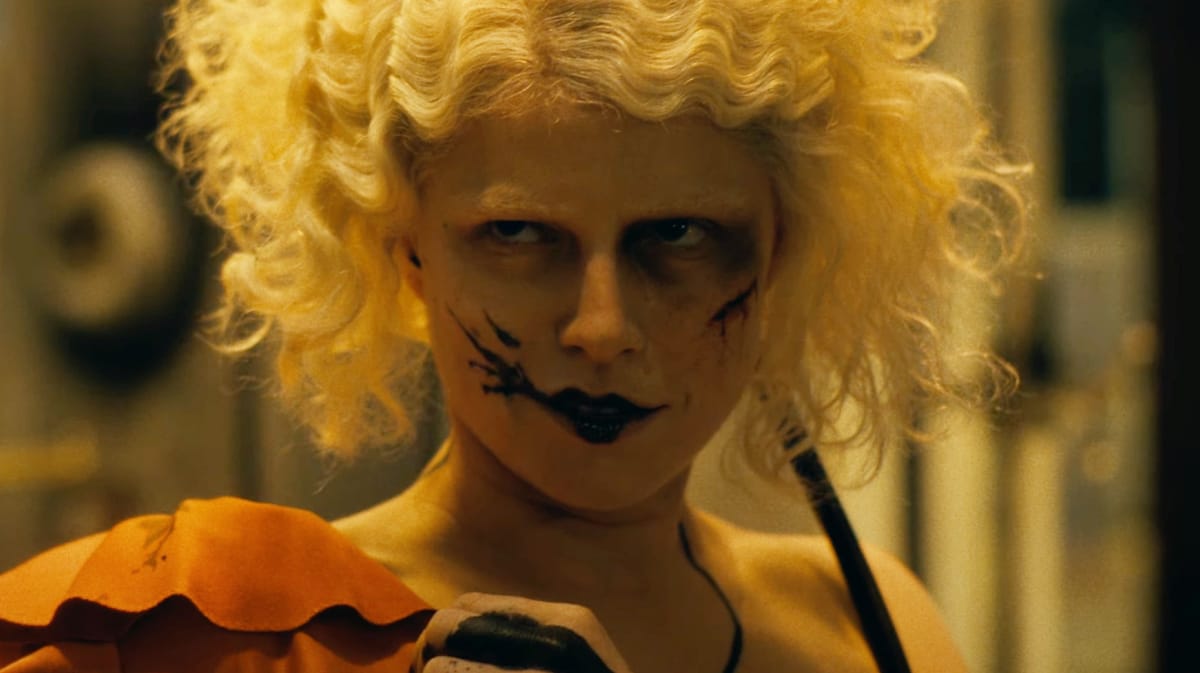
The two embark on a roadtrip, heavily inspired by the likes of Badlands (1972) and Bonnie and Clyde (1967) that sees the pair leave a string of bodies in their wake while Ida/The Bride becomes a folk hero, her white face, a black splotch at the corner of her mouth like a grotesque beauty mark, and black tongue becoming a dress code for the women of the 1930s uninterested in attracting a man. Gyllenhaal situates this as not just fantastic and exciting, but necessary.
Ida and Frank crashing a dinner party wherein she hears the souls of the women murdered by the Mob holds particular weight and lets Buckley go full-tilt. "The dead aren't at rest," she screams. This is a movie of female rage, rage that the bad men keep being allowed to hurt the women they hurt. We may mourn for the victims, but they never know justice, even in death.
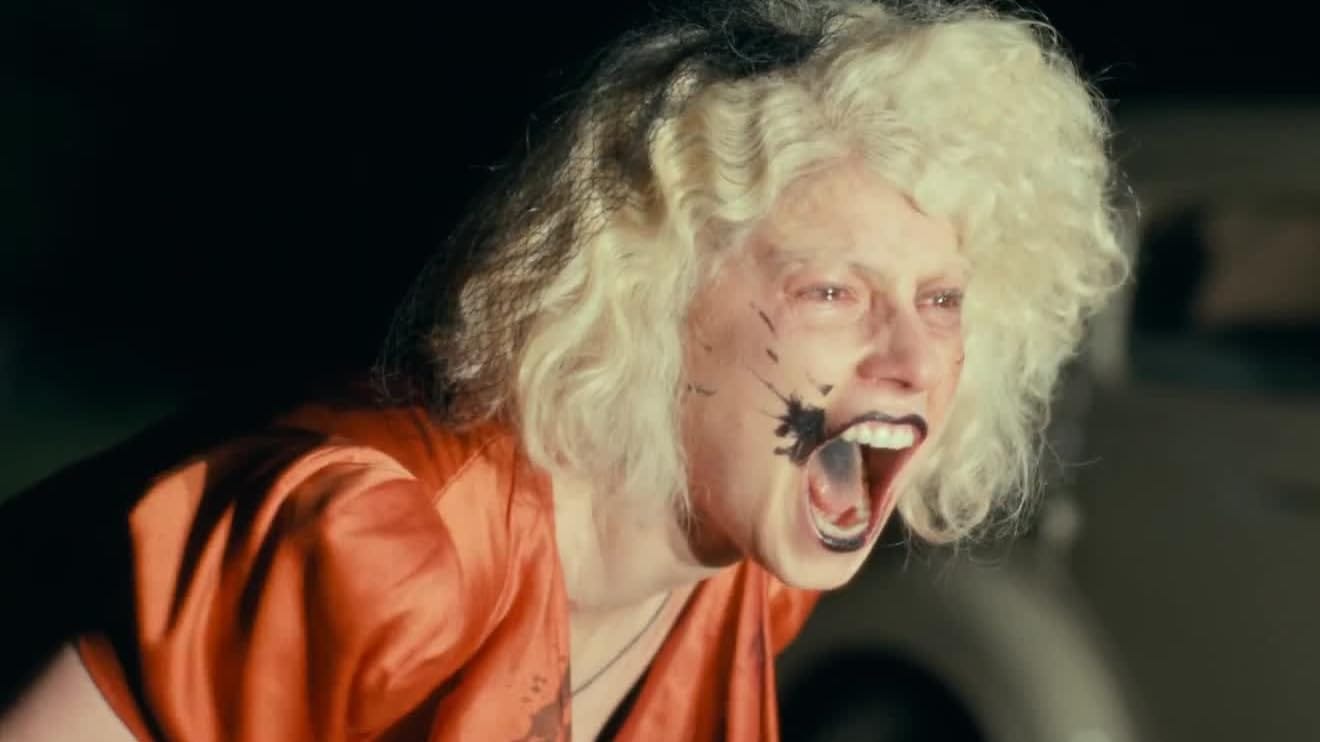
Buckley and Bale have a strong chemistry, though it's easy to see their dynamic of the Joker and Harley Quinn variety (this is what Joker: Folie a Deux desperately wanted to be.) But it is Buckley's world, commanding every frame with big emotions. Even in the moments of quiet contemplation Buckley holds the audience's attention as she contemplates how much the course of events is bigger than her, because it is. Bale, to his credit, also makes a meal out of Frankenstein. His interpretation of the role is a man hungering for companionship, for love, for sex (this movie certainly answers the questions of the logistics of that, for those curious). But he has an anger problem he can't figure out, flying off the handle, specifically where Ida/Penny is concerned.
The rest of the cast struggles to match them but the script has several plot points that fall into a narrative abyss, never meshing with the pair's own narrative trajectory, as if those judging the movie said to lop off 15-20 minutes from anyone else other than Frank and Ida's story. Jake Gyllenhaal, playing a Dick Powell-esque musical film star named Ronnie Reed (Jake Gyllenhaal), has both the most interesting narrative and the most underutilized. Frank finds Reed fascinating, having survived polio and working with one leg shorter than the other. Frank watches Reed's movies and puts himself in there, not as a monster but as a man putting on the ritz (one of at least five Young Frankenstein jokes).
The movie tap dances on something fascinating with Frankenstein's connection to cinema and who gets to be the star. It's not clear whether Gyllenhaal saw this as a commentary on the able/white/cis/het normalization of movies but it's amazing to witness. But once Ronnie and Frank actually meet, about midway through the movie, it's a brief moment that simultaneously kicks off violence and closes Jake Gyllenhaal's participation in the movie. That being said, the man is pitch perfect recreating 1930s-romantic dialogue.
The only other characters of substance are detectives Jake Wiles (Peter Sarsgaard) and Myrna Mallow (Penelope Cruz). They're there purely to push the Mob plotline along which, as often as Ida mentions it still never feels integrated into their narrative 100%. There is an interesting dynamic, though, running parallel to Frank and Ida. Myrna, a Latina woman, is desperate to be taken seriously on the police force, going along with her partner's casual misogyny that pops up alongside moments of compassion. It's unfortunate the movie doesn't have time to deal with Myrna's specific issues.
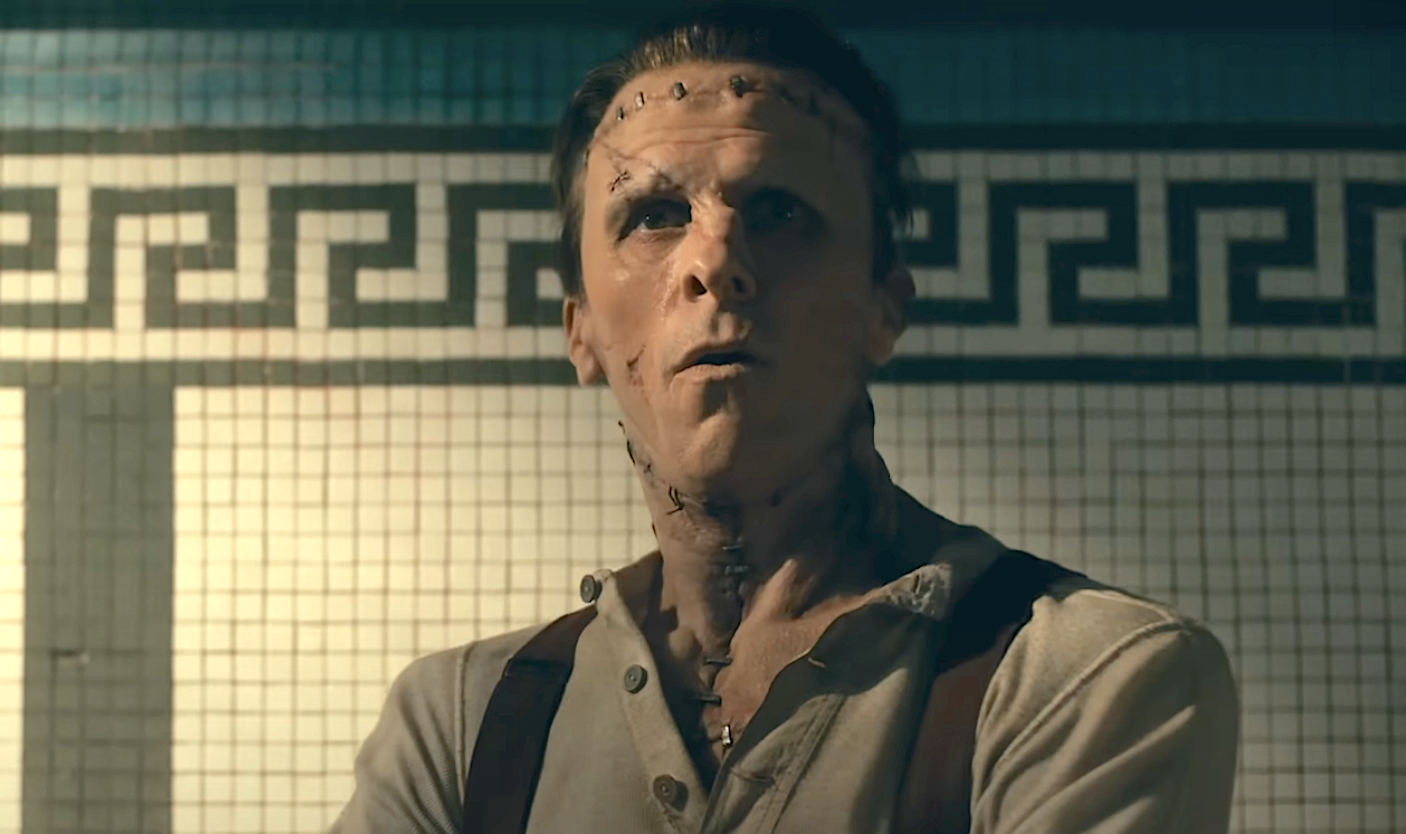
The flaws are obvious and yet never diminish the enjoyment found in The Bride! If anything it shows how much you want more from this world. By the time the film reaches its final showdown at a drive-in theater the ride has been so chaotic and engaging that it's almost sad to see it end. Mary Shelley would be proud!
The Bride! isn't without its flaws, at times feeling like a patchwork of ideas surrounding a revisionist story of The Bride of Frankenstein. Buckley is a powerhouse and Gyllenhaal's script is so bold and fresh that even when it doesn't work it pulls you in.
Grade: B
The Bride! is in theaters Friday.
Drop in the comments below: Are you over Frankenstein in the movies? Are you excited for The Bride!
ALSO PUBLISHED TODAY:
 Kristen Lopez
This post is part of The Film Maven free week! All week you'll be reading a mix of posts that include what paid subscribers get regularly!
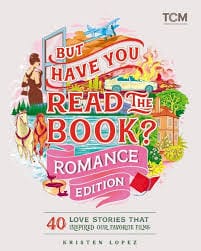
I have a new book dropping on July 28th! It's But Have You Read the Book: Romance Edition! I look at 40 of the most iconic romance novels and their filmic counterparts to show you the changes in between. Preorder your copy now!