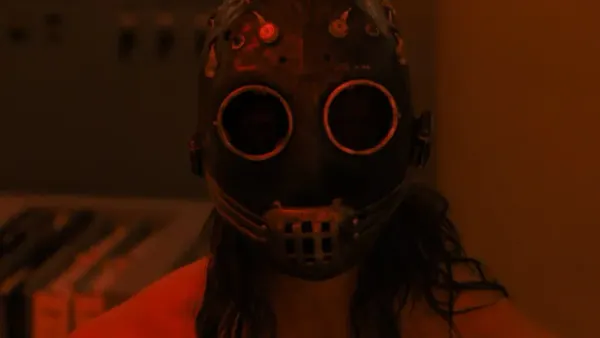
The Bone Temple Review: Nia DaCosta Doesn't Miss With 28 Years Later Sequel
One of the first great movies of 2026!

This post is free but it’s worth it to become a paid member of The Film Maven community! Paid subscribers are the backbone of The Film Maven who support independent journalism, as well as female- and disabled-created content. Paid Film Mavens get access to two-three exclusive articles a week including access to my series The Trade and Popcorn Disabilities, as well as the ability to chat with me on The Film Maven's Discord server.
Don't want to commit to a subscription? Leave a tip to show you enjoy what you're reading.
Last June audiences returned to the zombiefied world Danny Boyle and Alex Garland created with 28 Years Later. The film was a return to form for Boyle and Garland, but the movie's divisive tone--sharply jumping from gory and horrific to contemplative and melancholic–divided audiences. A sequel had already been filmed once that movie hit theaters, directed by Nia DaCosta, and audiences were concerned about its mid-January release.
But after the rapturous response to DaCosta's Hedda, it's time for doubters to step aside and let DaCosta ascend because 28 Years Later: The Bone Temple is not only better than its predecessor, it's one of the first great movies of 2026. DaCosta isn't just content to revel in the blood, horror, and suspense established by Boyle and Garland, but builds upon it. The two stories don't immediately click together but once they do, strap in for a movie that's equal parts heavy metal and beautiful.
Following the ending of events in 28 Years Later, we're reunited with the young Spike (Alfie Williams), newly accepted member into the murderous gang of brigands known as the Jimmies. Led by the villainous Sir Jimmy Crystal (Jack O'Connell), Spike is just trying to stay alive with his soul intact watching the group commit one atrocity after another. Concurrently, Dr. Ian Kelson (Ralph Fiennes) is still trying to find a way to cure Alpha zombie Samson (Chi Lewis-Parry). The two groups will eventually collide in an explosion of fire and violence.
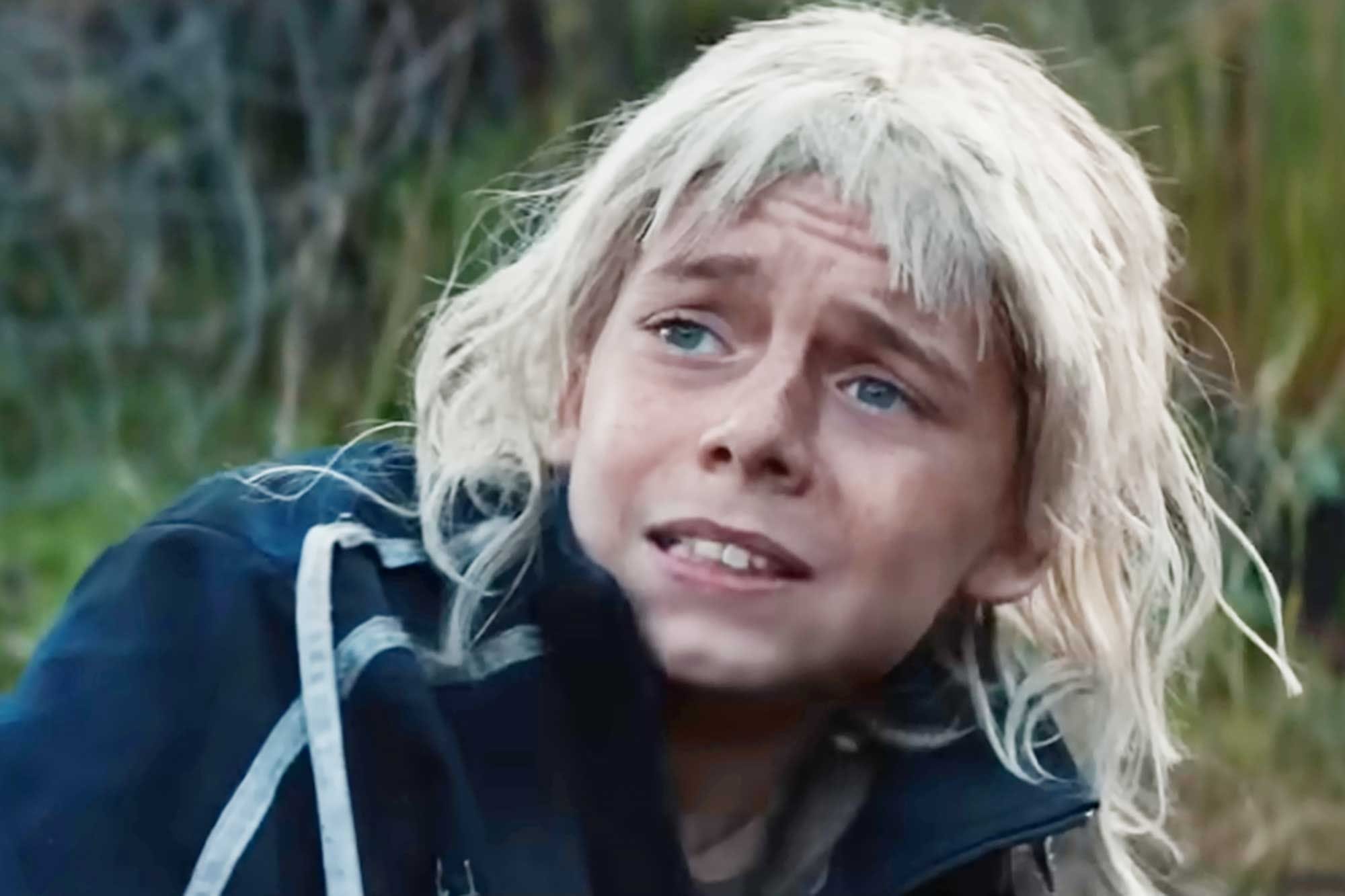
A cacophony of screams assault the viewers ears before the first scene is shown. These screams are silenced by a lone "Hello," Cillian Murphy's Jim calling for someone in the original 28 Days Later. It is this dichotomy that continues through Bone Temple: the violence and horror tempered by one sane person screaming out into the world of someone, anyone to help them get through it. DaCosta and screenwriter Alex Garland show us a world filled with ultra-violence balanced by those who still haven't lost their humanity. Case in point, Spike. The adolescent boy still reeling from the death of his mother in the last film is now tasked with saving his own life by becoming a Jimmie. An accidental bit of good fortune during a fight leads to an (extremely bloody and) positive resolution for him in that he gets to live for a little bit longer.
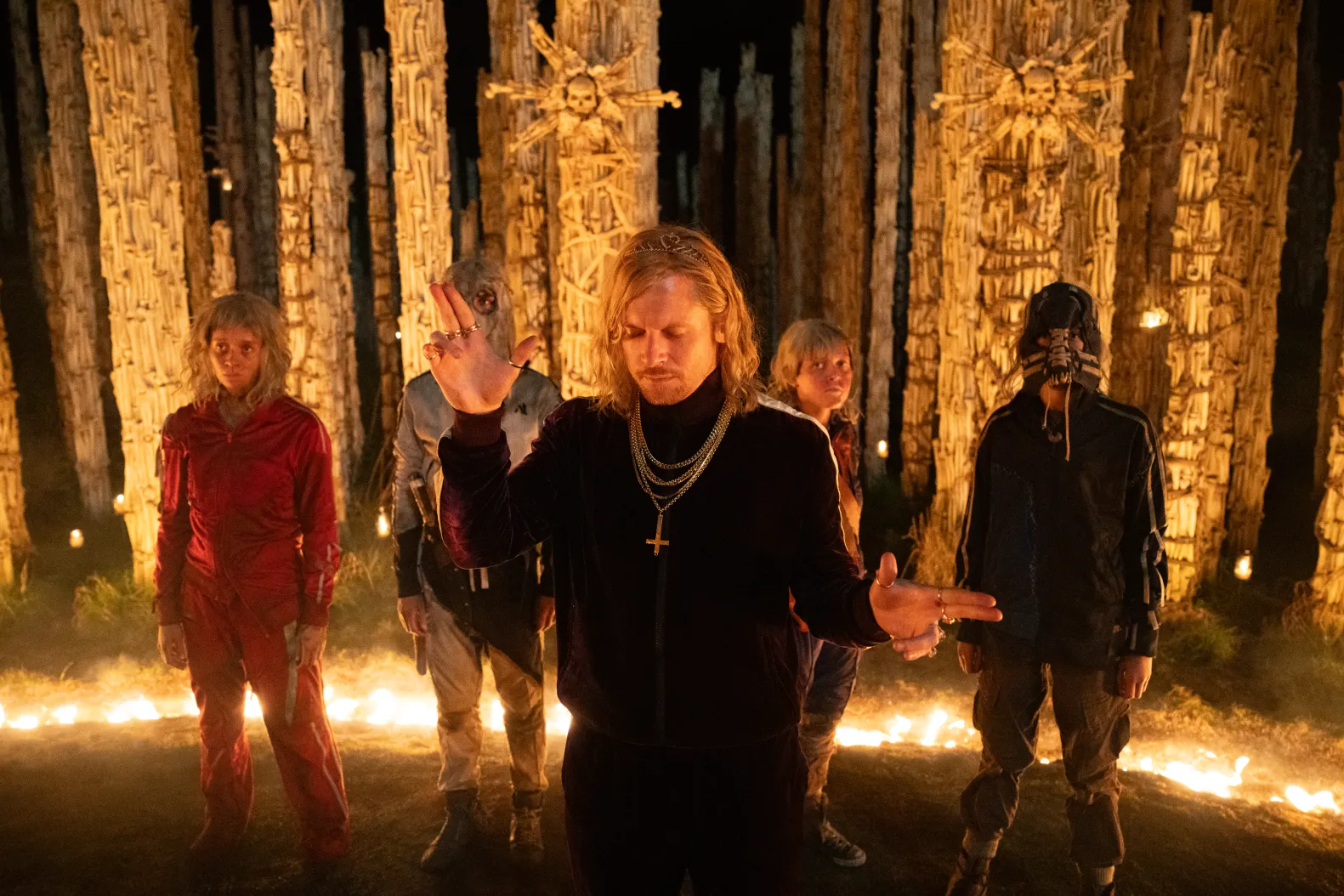
There still isn't much to know about the Jimmies after O'Connell's utterly bizarre appearance at the end of the last movie. But that's for a lack of backstory or depth, but more how the movie chooses to play with how mundane (or stupid) people become when trying to justify things. In this case, there's no political ideology or anything profound in Sir Jimmy Crystal's desire to inflict pain and torment on people. He's just a straight-up Satanist using the Devil, whom he refers to as his father "Old Nick," as his excuse for why he's so bad.
His various youth followers all have individual moments to set themselves apart but it is the young women in his crew who make the most out of things. Emma Laird as Jimmima is particularly stand-out. She's the Harley Quinn of the crew, content to jump around, dance, and kill whenever Sir Jimmy tells her. At one point, when one of their victims is tasked with fighting, the young man picks Jimmima, presuming her emotions are indicative of weakness. Erin Kellyman, as Jimmy Ink, takes the opposite route. Kellyman is great at playing the infiltrator, the one who you never truly know what she's thinking. Is she out for herself? A mastermind? Or a follower?
Sir Jimmy doles out punishment throughout the movie, masquerading it as "charity," with the widest grin on his face. Between this and Sinners, Jack O'Connell is becoming one of the great villain actors. He's in complete control in every situation, trying to find ways to rationalize and justify in the moment, unwilling to let his acolytes see past his own bullshit. A great cult leader is one who is able to twist anything into "proof" that they're right, and O'Connell is a master at letting a little something flit across his face, a moment of wavering as to "How the hell am I going to explain this away?" This comes to a head when the group meets up with Kelson.
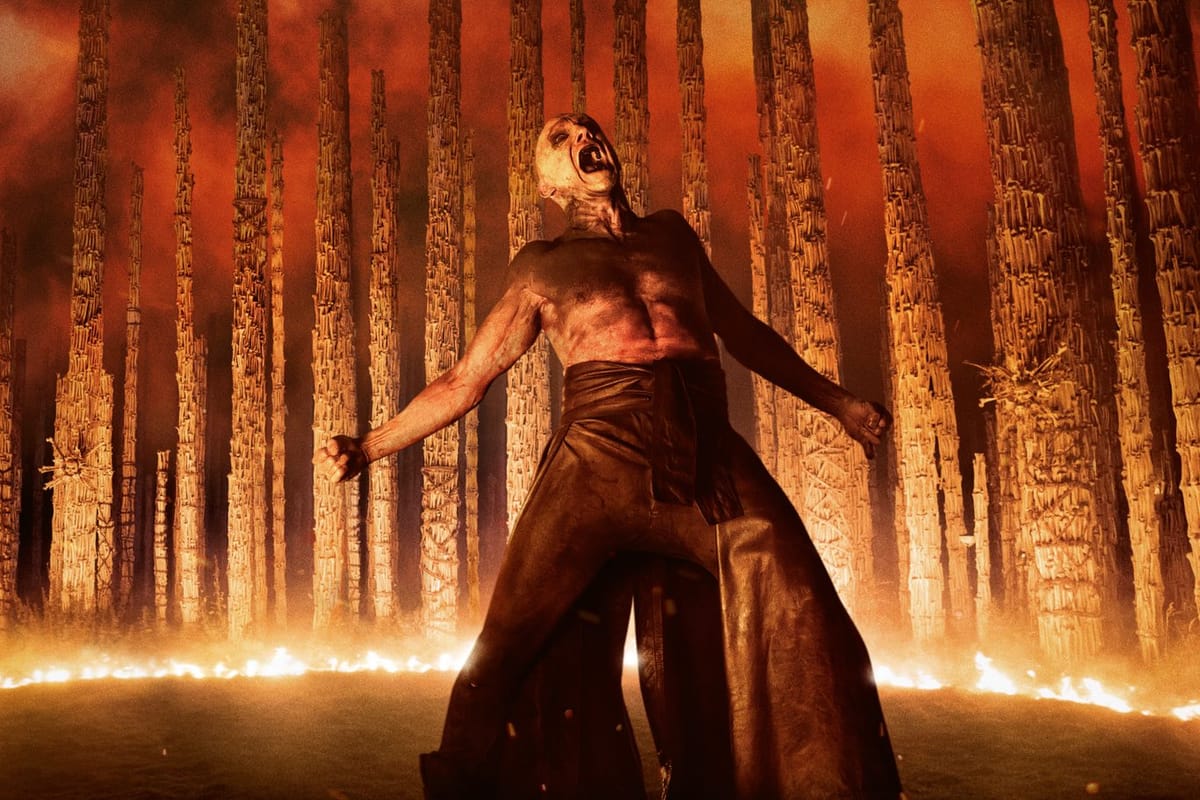
Kelson's plot line is the central narrative in The Bone Temple, and after reintroducing Spike and the Jimmies they take a severe backseat in favor of Kelson and Samson. Those who weren't down with the more philosophical elements of his narrative in the last movie probably still won't care for this but Kelson remains the beating heart of this zombie landscape. Fiennes goes for broke with this role, playing Kelson as lonely, funny, and batshit insane. Sometimes that comes through all in one scene--in this case a gonzo performance to an Iron Maiden song.
Unlike the previous 28 Days/Weeks/Years movies, which were focused on survival, Kelson is a man trying to stretch out the days. He spends his time walking around, singing Duran Duran songs. He doesn't worry about Samson killing him if it means he gets someone to interact with. Fiennes and Parry have some a great chemistry together. You're rooting that this human/zombie relationship can work! For each, it's less about having conversation and just being able to sit and enjoy company with another. Parry, in particular, continues to be so magnetic in this role (it's why he made my favorite side performances list last year). A scene in a train station shows his skillful blend of action, giving off power and menace, as well as his ability to convey subtle flits of recognition in his gaze.
This all builds to an ending that no doubt will tie into the next feature–already greenlit–that looks to bring everything home. It should also tie up some loose ends. A large portion of the film's midway point is devoted to a pregnant woman who disappears and is never heard from again. If there's a grand plan for her that'd be great to see but don't expect it to anywhere here.
28 Years Later: The Bone Temple continues to show much life there still is in the series, and what an amazing director Nia DaCosta is. (Her and cinematographer Sean Bobbitt need to keep making movies together forever.) In your face and unrepentant, the Bone Temple draws you in and refuses to let you go. I'm ready for another ten of these movies.
Grade: B
28 Years Later: The Bone Temple hits theaters Friday.