
Disclosure Day Review: Steven Spielberg's Alien Drama Struggles to Reach the Stars
Thrilling action makes up for a script devoid of character

This post is free to enjoy but it's worth it to become part of my exclusive Gold Star Crew of Silver and Gold Film Mavens.
🌟Supporters like: Angel Giuffria, Tari Hartman Squire, Dkod, Debann, Matthew Jackson, Gregory Ayers, Linoleum Podcast, Valerie Kalfrin, Devin Meenan, and Alan Katz💫
Paid subscribers are the backbone of The Film Maven who support independent journalism, as well as female- and disabled-created content. Paid Film Mavens get access to shout-outs, exclusive articles and series, Zoom mixers, and The Film Maven Discord server.
Consider becoming a paid subscriber and joining the community that invests in independent journalism free of AI and influencer opinions!
The Film Maven is partnering with the Alliance of Women Directors in anticipation of their Back to the Set event in Burbank on June 12th and 13th. Film Maven readers can get $50 off a 2-day pass after using the exclusive discount code: bts26tfm! It's gonna be a great event so buy your tickets now.
In 1977, director Steven Spielberg questioned the existence of alien life in Close Encounters of the Third Kind, following that up with the child-like wonder of extraterrestrials in E.T. in 1982, and the frightening horrors of alien invasion in 2005's War of the Worlds. He returns to life beyond the stars with Disclosure Day, a movie whose tagline asks: "If you found out we weren't alone, if someone showed you, proved it to you, would that frighten you?"
Spielberg pulls less from his own work and tries to make a more heartracing 1970s "tell the world" movie. Disclosure Day is less an introspective, contemplative story about alien life, but a propulsive race against time whose high stakes premise smothers everything, including any type of interest in its characters.
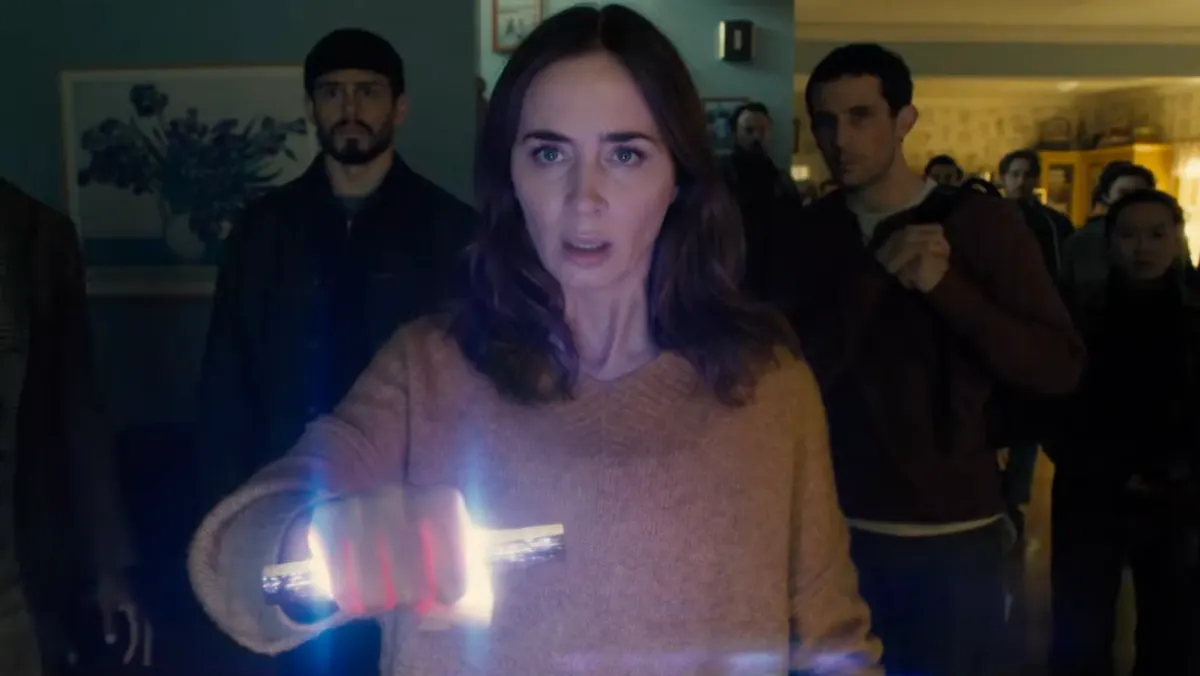
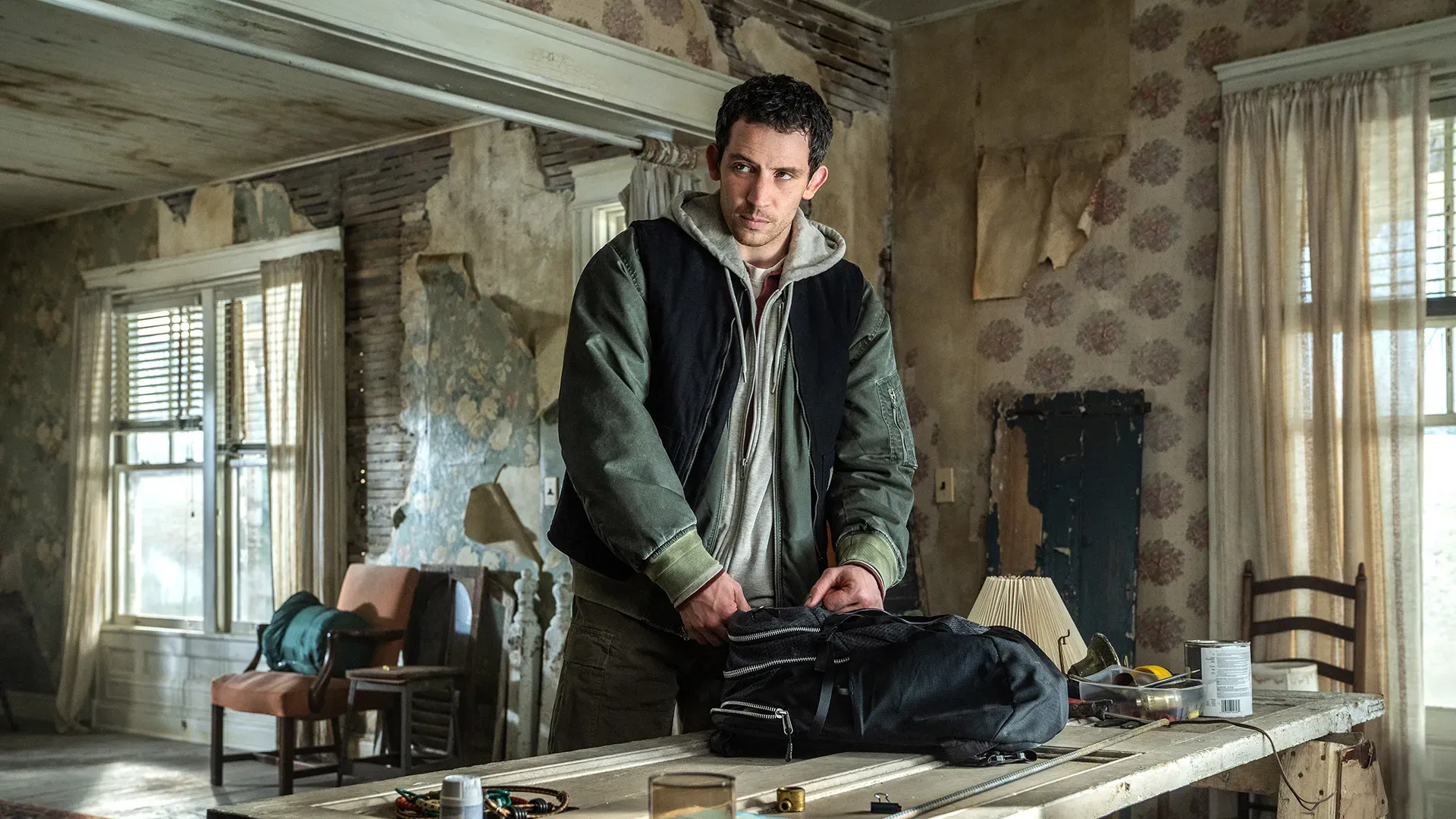
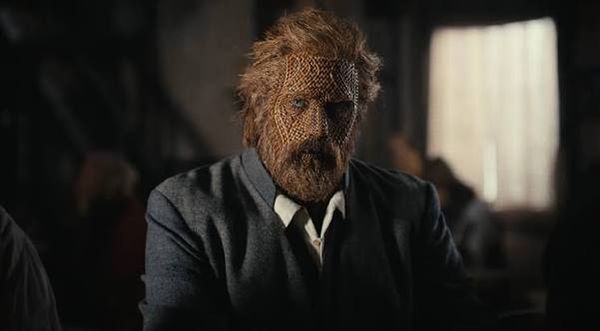
Daniel Kellner (Josh O'Connor) has escaped the high security Wardex facility with documents and videos not only proving the existence of alien life, but their numerous visitations to Earth. He's set upon by Wardex and its owner Noah Scanlon (Colin Firth), whose access and use of alien technology is killing him. When Daniel meets up with Margaret Fairchild (Emily Blunt), a Kansas City weather reporter who has started experiencing bizarre alien phenomena of her own, the two must race against time to release the information to the world.
Spielberg and screenwriter David Koepp drop audiences right into the middle of their premise. Kellner forced to rescue his girlfriend Jane (Eve Hewson) in exchange for the documents and video he's absconded from Wardex with. Once they're reunited they soon go on the run, holing up in the former monastery where Jane once lived. The briefest of conversations sees Kellner surprised by this revelation – though how long they've been dating is anyone's guess – and from there we don't learn anything further about their dynamic. Do they love each other? Do they live together? Who knows, don't worry about it.
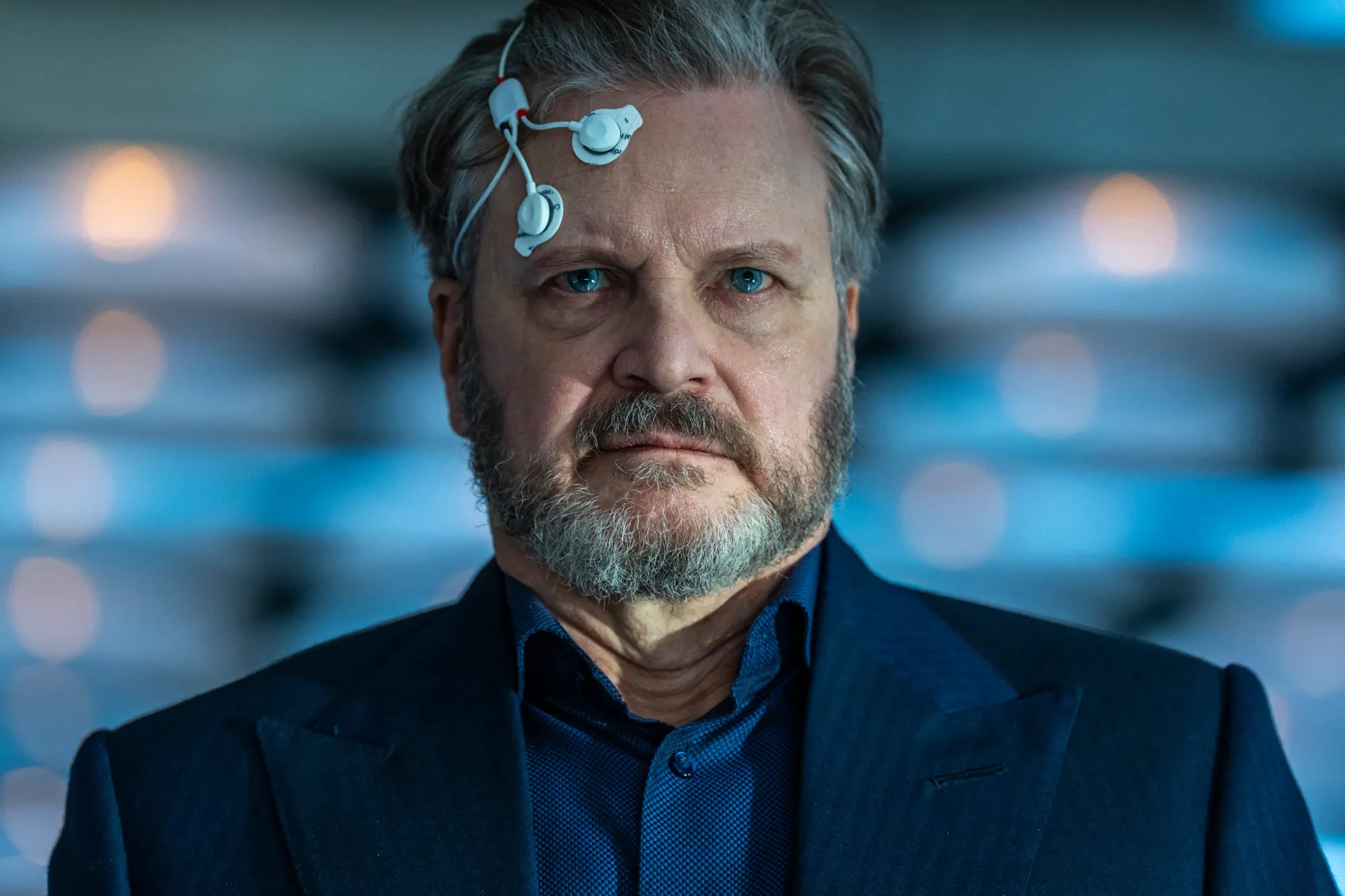
That's the ongoing conceit around all of these characters. We meet them in rapid succession, and what you see is what you get. Any other information about their lives is extracted breathlessly – usually through tears or screaming – and doesn't have any bigger implications on the plot short of making us have some sort of connecting tissue with them. Wardex head (?) Scanlon wants Kellner's information back, even going so far as killing him. He has an alien weapon he utilizes to get into people's heads and possessing their bodies. There's a stray conversation about a dead wife that so abruptly thrown out and later disregarded but, hey, it gives him personality beyond British baddie. Then there's Margaret, the peppy weather woman who finds herself adrift in life. She constantly moves her put-upon boyfriend Jackson (Wyatt Russell) around the country, questing for...something. Her dad had Parkinson's. Character!
The problem isn't that these characters are written on cheesecloth, it's that we're supposed to see, through their eyes, the reaction to this alien revelation. In answer to the tagline's question, Daniel and Margaret – who are our primary protagonists – never question the information they receive. They aren't even particularly frightened of that information, more so being killed by Wardex and Margaret's newfound ability to star speaking in foreign languages which gives her the ability to see into people's lives.
By limiting the scope of the narrative to Daniel and Margaret, who have a real Escape to Witch Mountain-esque relationship to the aliens and each other, there's no room to examine how the information will be taken on a global scale. Jane does have an interesting subplot in her fears that people believing in alien life will make them turn against God, but she's the one quasi-naysayer in the entire narrative.
Spielberg sets this information against a world that is slowly falling apart. News programs announce the coming of WWIII, while Margaret and Jackson visit a local gas station devolving into chaos as people buy food and water. One character not so subtly considers the information a "distraction" from impending nuclear war. But, again, the narrative remains fairly insular. Once Margaret and Daniel team up they're forced onto backroads and moving trains, and it looks like, at least in Kansas City, people aren't particularly panicked.
There's just little interest, narratively, outside of the basic threads presented to stitch together the story. There's a serial-esque approach to everything, pushed forward by Colman Domingo as Hugo, the unknown person who kickstarted everything and spends over an hour of runtime imparting directions on the phone and building a house for reasons that come clear towards the end. Hugo speaks in cliff-hanger platitudes like "When the time is right, all will be clear." This sense of grandiosity ends up setting up a third-act reveal beyond what we already know.
Spielberg is ordinarily great at the little bits of human interaction in his films. Think of Chief Brody (Roy Scheider) and his son at the dinner table in Jaws, or Richard Dreyfuss and the mashed potato mountain in Close Encounters. Here, that's relegated to one sequence of Margaret having a panic attack on a train as Daniel tries to calm her down. In a movie that is go, go, go, there aren't enough moments to let scenes breath. Here, this gives O'Connor and Blunt a moment to be actual humans and it's frustrating there's not more.
To their credit, the actors do superb work with how thin their characters are. O'Connor continues to be a bright spot in everything he does. Blunt is also good, able to find some levity in her line readings, particularly opposite the exasperated Russell. "Since when do you speak Korean?" "Speak Korean? What?" Though she's not the first character introduced, Blunt's Margaret becomes the de facto star of the movie with a third-act plot twist that hints at some Poltergeist-esque vibes but never goes that far. Firth is just the villain until the third act when he appears to just, literally, give up. Hewson does steal the show as Jane, forced to struggle with her faith, even more so when she's possessed by Scanlon.
Despite the flaws in the narrative, the technical mastery of the movie is off the charts. Spielberg's long-time composer John Williams crafts a beautifully sweeping score that, in several sequences, sounds like a great riff on Jerry Goldsmith. An abduction sequence sounds directly scored from Goldsmith's flawless Poltergeist composition. And cinematographer Janusz Kaminski does a wondrous job with the camera. Final twenty minutes of the movie is also a heartbreakingly wonderful sequence, expertly edited by Sarah Broshar.
At the end of the day, Spielberg is focusing on themes a lot of other movies are bringing up: specifically the need for empathy in the midst of widespread chaos, and Americans desire to handle the truth. Can that make for something that seems a bit twee in parts? Sure, particularly when it comes to the power of the press. The third act is a rapid-fire sequence in a network control room that seems every network – yes, including Fox News – consider breaking this information. If you recall Three Days of the Condor (1975), the press is supposed to be the great arbiter of truth and....lord bless Steven Spielberg for thinking that's something we can aspire to again.
Grade: C-
Disclosure Day is in theaters Friday.
You just read this for free! Here's what you missed by not becoming a Gold Star paid subscriber starting at just $4 a month or $30 a year:
- Access to all my paid content and exclusive series like:
 Kristen Lopez
 Kristen Lopez
- Shout outs on my newsletter when you join and whenever you have something you're launching.
- Included on my Gold Star Crew list
- Bi-Monthly Zoom Mixers where we can talk entertainment, get advice on journalism, and generally discuss the world.
- Access to our Discord server where we can chat about movies and entertainment. It's also where I host my yearly Golden Globes and Oscar watches.
- Participation in my new Film Maven Secret Santa Gift Exchange (launching November 2026), book clubs, and film discussion groups (launching later this year)
Have you preordered my latest book, But Have You Read the Book: Romance Edition? Upload your receipt to the link below to get 3 months of Gold Film Maven membership FOR FREE and a free tote bag!
 Kristen Lopez

![Renate Reinsve Was Asked Not to Know the Truth in Fjord [Video]](https://storage.ghost.io/c/24/37/24372e80-8819-45cd-8a9d-4dbc679f7337/content/images/size/w600/2026/10/1-3.png)