Popcorn Disabilities: Freaks Remains Essential Disabled Cinema
The movie that once held the record for the most disabled actors

Welcome to this installment of Popcorn Disability, the series looking at disability through the lens of pop culture.
This post is free to enjoy but it's worth it to become part of my exclusive Gold Star Crew of Silver and Gold Film Mavens.
🌟Supporters like: Franker Cline, Mark Murphy, Tasya Swisko, Sandeep Chandowalia, Elissa Farkas, Kiahamarafisch, Jason Reynal, Lawrence Carter-Long, Media Path Podcast, and Shupei💫And welcome new Gold Star Crew member Ben Noise!💫
Paid subscribers are the backbone of The Film Maven who support independent journalism, as well as female- and disabled-created content. Paid Film Mavens get access to shout-outs, exclusive articles and series, career mentoring, Zoom mixers, and access to The Film Maven Discord.
Consider becoming a paid subscriber and joining the community that invests in independent journalism free of AI and influencer opinions!
Portions of this piece come from my book Popcorn Disabilities: The Highs and Lows of Disabled Representation in the Movies.
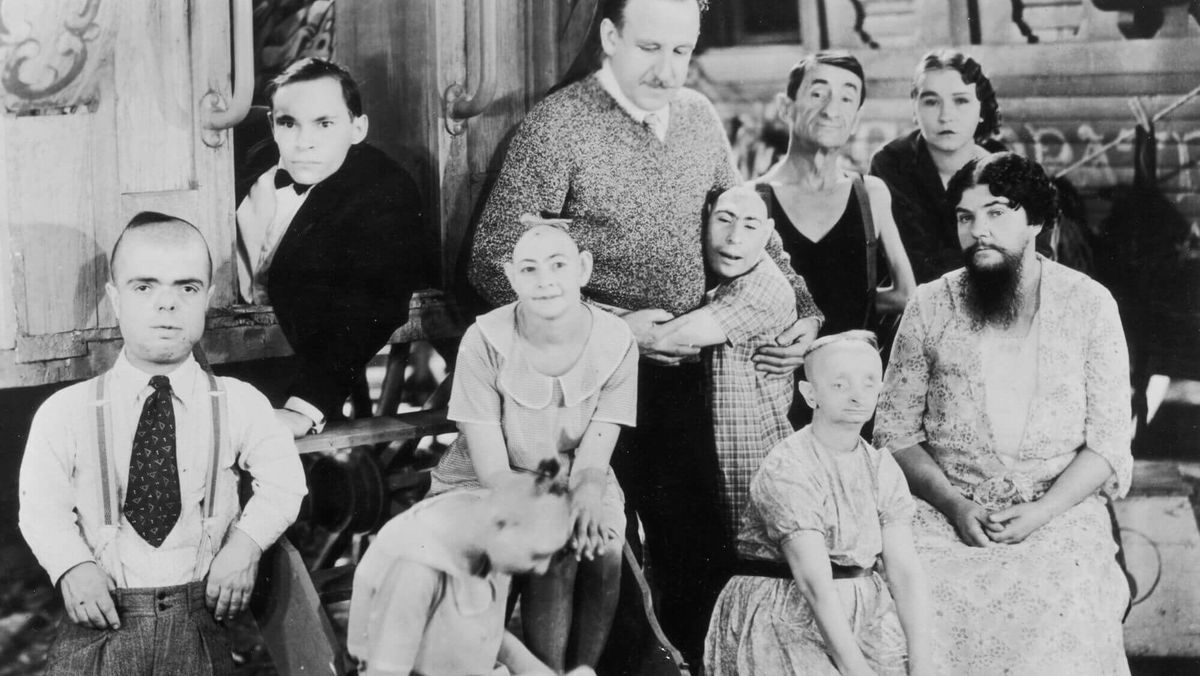
When I saw Being Heumann I was shocked at how it finally broke a record established all the way back in 1932, with Tod Browning's Freaks: that of having the most disabled actors in a studio-backed feature. Freaks is a movie I maintain is one of the best, most unique disabled features made, even if it struggles with stereotypes of the day. But Freaks deals with several of those outdated tropes, more as the result of an ableist studio system than a bad script. What Freaks did through its storytelling and authentic casting is revolutionary, then and now. And it's remarkable to think that, in 2026 with Being Heumann, we've finally broken its disabled casting record.
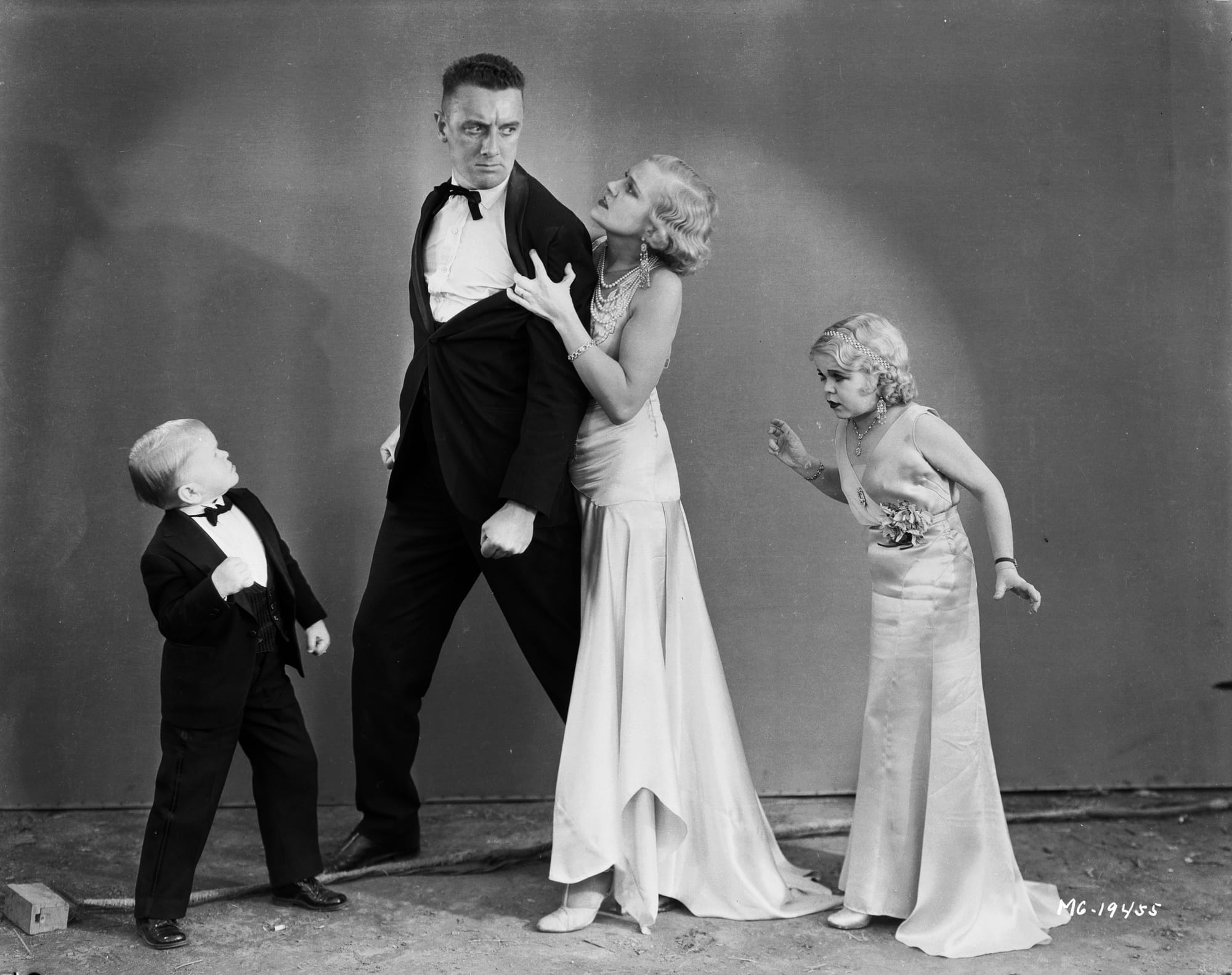
Freaks follows a group of circus performers as they live, love, and work. Little person Hans (Harry Earles) falls in love with able-bodied “big woman”/trapeze artist Cleopatra (Olga Baclanova), at the expense of his long-suffering girlfriend and fellow little person, Freda (played by Earles’s own sister, Daisy). But Cleo is only interested in Hans because of his large fortune and decides to marry him and kill him so she and her lover can share the spoils. This doesn’t sit well with the rest of the circus performers who discover Cleo’s plan and enact the “code of the freaks” to get retribution.
Freaks is controversial for audiences, both abled and disabled. Some see it as a groundbreaking story about disabled agency, while others say it depicts those with disabilities as murderous, vengeful monsters. Freaks, for better or worse, is a unique narrative that dares to have so many disabled performers in one space. Freaks doesn’t make every character completely nuanced, but stray scenes of the everyday lives of the “freaks” opens a door toward showing who they are in private, the mundanity of their lives, the high points and the low.
Freaks started out as an attempt to capitalize on the success of another successful film, that being Browning’s previous feature, Dracula. Once Lon Chaney, Browning's frequent collaborator, died in August 1930, the director was adrift, professionally. He started working at Universal and found success with Stoker’s titular vampire. He was soon courted by MGM, where the studio’s head of production and “Boy Wonder” Irving Thalberg, offered Browning carte blanche to make anything he wanted. Thalberg would come to regret that decision.
Browning read the Tod Robbins short story Spurs in the 1920s and wanted MGM to buy it as a vehicle for Chaney. The original story holds commonalities with what eventually ended up on-screen. It focuses on a little person who marries a woman only interested in his money and who plots to kill him. When MGM lured Browning back in 1931, he saw it as his opportunity to make his passion project. It’s said that when screenwriter Wallis Goldbeck showed Thalberg the finished treatment for the story, he declared,: “I asked for something horrifying . . . and I got it.”
Browning was fascinated by circus performers from a young age. At sixteen, he quite literally abandoned his family to run off and join the circus, working his way up from roustabout to spieler (otherwise known as a barker), before crafting his own acts involving contortionism. He was billed as “the living hypnotic corpse” in a live burial act. Browning was drawn to those who worked in the sideshows, mostly disabled people, who found the circus to be the only place that offered them a living. Several freak show performers saw international stardom; most famously among them was Charles Sherwood Stratton, billed by circus impresario P. T. Barnum as General Tom Thumb. But it was a hard road that saw performers struggling to balance stardom with the knowledge that they were participating in their own exploitation.
First-time viewers of Freaks take note of the able-bodied characters’ abject cruelty against those with disabilities, starting with the carnival barker who opens the movie proclaiming to the audience around him and, by extension, those watching in the theater, that they are about to witness “living, breathing monstrosities” who, “if not for an accident of birth,” could be any of the able-bodied people in the audience. They’re positioned as monsters whose disease is contagious and can infect good, abled Americans. The barker directs everyone’s attention to a nearby exhibit. It’s not known who, or what, is on display, though he describes it as someone who isn’t one of those “accident at birth” freaks. This average, able-bodied person is someone whose disability has changed by violating the code of the freaks and thus our cautionary tale begins.
The disabled performers of Freaks aren’t aesthetically pleasing to the audience’s eye. Their disabilities are overt and extreme to an extent that audiences, even today, struggle to accept them. As Angela M. Smith writes in Hideous Progeny, “Viewers could not bear to see a ‘candid’ representation of ‘physical abnormality’ [in Freaks] without the kind of framing that could distance them from and help them explain or make sense of such bodies.” Thus the need for an able-bodied buffer for the audience to identify with embodied in the kind-hearted but basic Venus (Leila Hyams) and Phroso (Wallace Ford), friends to the circus performers.
But these characters aren’t the movie’s central point of view and they aren’t nearly as memorable compared to the visually distinctive Hans and Frieda, “half-man” Johnny Eck who walks on his hands, or Prince Randian, the “Human Caterpillar,” whose very cool ability to roll a cigarette is shown on-screen. John Thomson once wrote that “we are horrified [by Freaks], but we are simultaneously ashamed of our horror; for we remember that these are not monsters at all but people like us.” There’s a collective need to rewire one’s brain to see disabled people outside of this internalized horror.
Cleopatra isn’t one bad apple in a pristine orchard. She’s representative of how the whole batch is rotten, even if they think they have good intentions. There are those who show their callousness, like a scene where a group of performers born with microcephaly innocently play near a river. When a man passing by sees the group, he says they should be “smother[ed] . . . at birth or [locked] up.” Even presumed allies like Phroso, Madame Tetrallini (Rose Dione), and the beautiful Venus fall victim to ableism. Phroso and Madame Tetrallini infantilize the performers by referring to the microcephalics as “good girls” and “children.” Venus later uses the word “freak” to represent all the disabled performers, as if it's their identifier. This is what writer Meira Cook calls “the systemic monstering . . . of the so-called normal characters” showing who is truly monstrous, and how a so-called normal exterior can hide a dark soul. It’s an obvious but effective trope in this time period, when eugenic thinking so often placed disability as something to avoid.
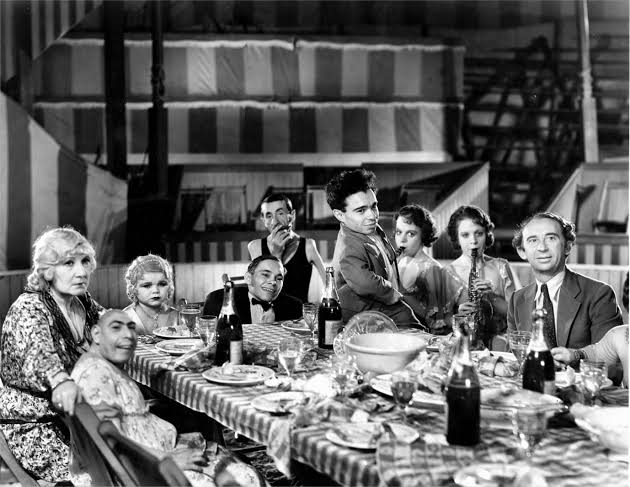
What shocked the audiences in 1932, and surprises them today, is the pride the circus team take in their disabilities. Frieda tells Hans that the unified love and respect of the performers for each other allows them to see Hans for the person he truly is. “To me, you are a man, but to her [Cleopatra] you’re only something to laugh at.” The bearded woman gives birth to a baby girl, shocking in itself since disabled characters are usually perceived as asexual and eugenics was opposed to them procreating. There are numerous allusions to disabled people having sex in Freaks, and not in ways that are titillating.
Hans checks out Cleopatra upon seeing her for the first time, and conjoined twins Daisy and Violet (played by long-time circus stars Daisy and Violet Hilton) have an entire subplot wherein each one loves a different man. During a romantic moment when Violet kisses her fiancé, Daisy reacts as if she is experiencing pleasure, through her sister. These aren’t the social parasites the eugenics movement sold disabled people as being. They have the same domestic situations and life events as able-bodied audiences, and they are healthy, kind-hearted, and articulate.
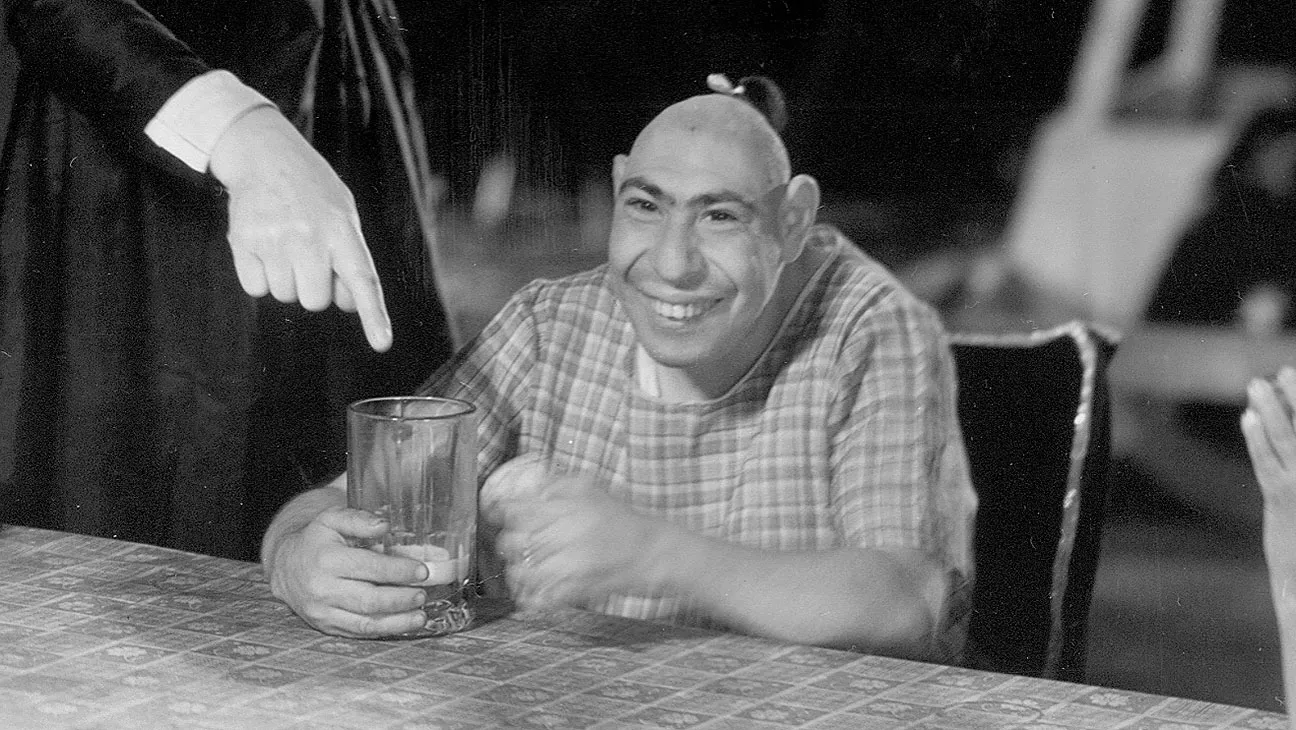
The movie isn’t unimpeachable and the critiques by disabled critics are valid. Freaks is bound up in the remnants of the Victorian-era freak show. The story is a horror spectacle that involves real circus oddities for an able-bodied audience to revel in. They are on display in the circus landscape of the movie, with the added layer of exploitation of being sold to an audience of paying customers in a movie theater. As Cindy Lacom writes, “Those who displayed themselves in freak shows at least participated in a capitalist economy.”
Audiences of the Depression didn’t take it well seeing disabled people on a big screen. As J. Hoberman explains, “Freaks is asking a Depression audience to identify not with the Beautiful People who were going to make it in Hollywood, but with sideshow mutations, a total underclass. As a reflection of the time, it’s almost revolutionary.” Freaks doesn’t tread in pity. The characters’ ability to thrive is an act of defiance. Audiences in 1932 let their antipathy toward the film be known. It’s unclear which stories about Freaks are true and which were crafted during the film’s release to sell it as a horror feature. Story editor Samuel Marx claimed that the disabled actors were required to eat in a separate mess hall so that the Beautiful People, as Hoberman calls them, in the MGM commissary could “eat . . . without throwing up.” Even acclaimed writer F. Scott Fitzgerald was thrown into the Freaks legend. Marx went on to say Fitzgerald “turned pea-green and, putting his hand to his mouth, rushed for the great outdoors” after meeting Daisy and Violet Hilton. Costar Olga Baclanova said, “Every night I felt that I am sick because I couldn’t look at them.”
Freaks was advertised as a movie “not fit to be shown.” The movie’s marketing played Freaks up as exploitative and prurient in its themes, with posters asking, “Do the Siamese Twins make love?” or “Can a full-grown woman truly love a midget?” A review in Variety said the film was completely unbelievable because “It is impossible for the normal man or woman to sympathize with the aspiring midget.” When the movie hit theaters, the Los Angeles Times reported that spectators fled their seats and the movie’s production manager claimed “a woman . . . tried to sue the studio [MGM], claiming the film had induced a miscarriage.” MGM cut thirty minutes of footage from the movie, which totals sixty-two minutes today. The original version is unfortunately lost.
Freaks’s existence, coupled with some other Hollywood indiscretions, is cited as a reason the Hollywood Production Code was implemented. MGM quickly withdrew the movie from theaters soon after release. and it took thirty years before Freaks saw a revival and critical reevaluation. If not for the film’s rediscovery on the midnight movie circuit, Freaks might have disappeared into obscurity, a strange oddity known for its casting and nothing more.
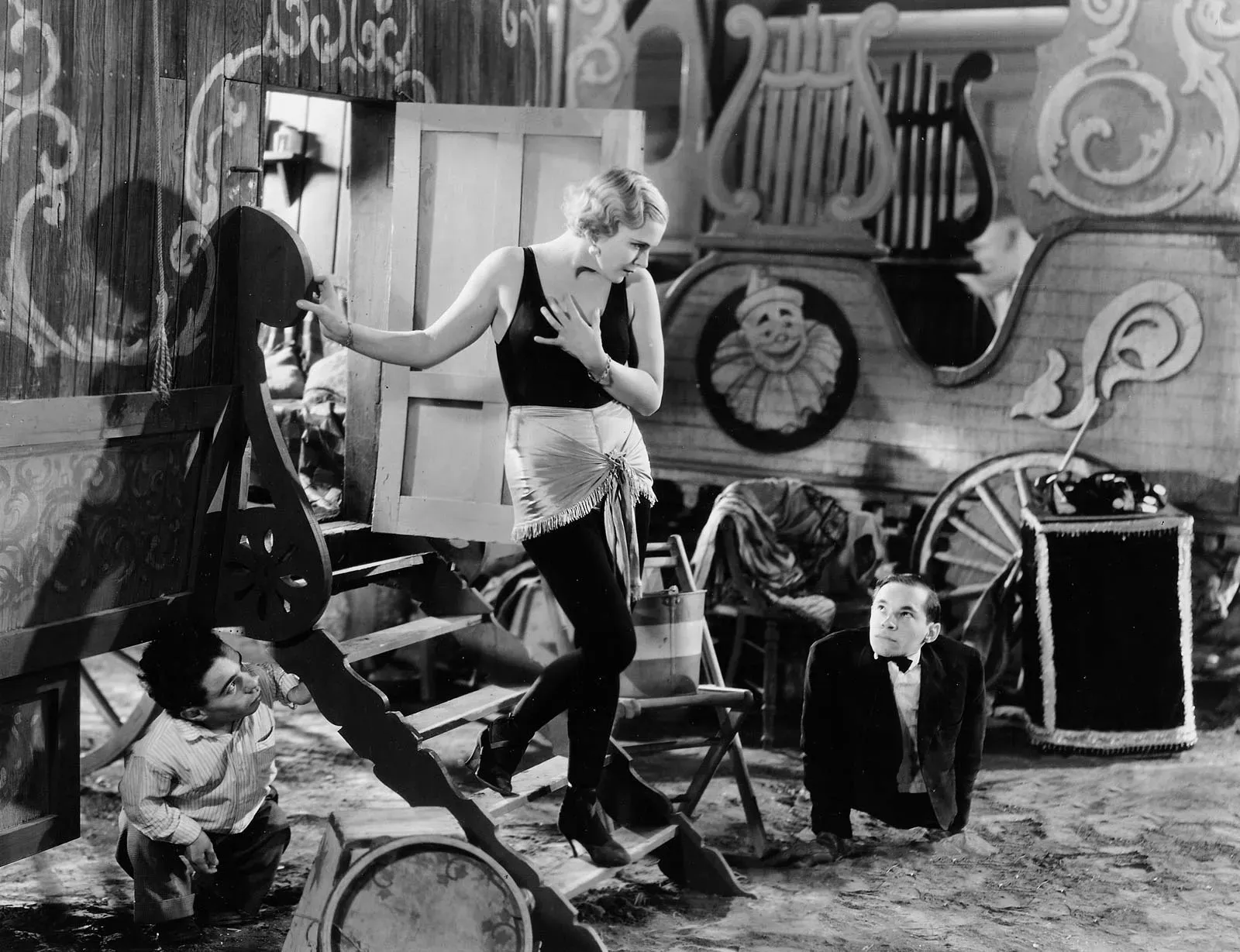
What Freaks pulled off in 1932 balances out the criticisms of the film. But because the production didn’t utilize professional actors, it presents an unfortunate stigma that we still see today: that disabled actors can’t act, or they are only cut out to play disabled characters similar to themselves. The movie’s notoriety also prohibited the disabled cast from capitalizing on the film or finding any success in Hollywood after. Harry and Daisy Earles were well regarded in the circus field as part of the famed “Doll Family.” Harry, along with his other sister Gracie, were billed as the “Smallest Dancing Couple in the World” in the 1920s, while Daisy was touted as “the midget Mae West.” Harry had previously worked with Browning on the 1925 Lon Chaney vehicle The Unholy Three and was featured in The Wizard of Oz as a minor member of the Lollipop Guild. The lack of opportunities in movies for little people, coupled with their thick German accents, saw Daisy and Hans retire from the screen soon after the movie’s release.
Daisy and Violet Hilton have a story that’s fascinating on its own. (Dean Jensen’s 2006 biography, The Lives and Loves of Daisy and Violet Hilton is a must-read.) The sisters made a second film in 1952, an exploitation feature called Chained for Life. The movie is a difficult one to watch, not only because of how cheaply made it is but for how it actively looks down on the sisters. They ended up becoming more famous for a series of gimmicks involving multiple fake marriage proposals and weddings, eventually overstaying their welcome in the public eye.
 Kristen Lopez

According to Johnny Eck, the boy with no lower body, Tod Browning took him under his wing and promised Eck a second film that Browning would direct. Whether this deal was real or not, Eck moved back to his native Baltimore with his brother and opened a penny arcade. When Freaks was revitalized on the midnight movie circuit in the 1980s, Eck would regale those who visited his Baltimore house with stories about the movie. And what happened to Tod Browning? His career never recovered after the release of this film. Though, as David J. Skal writes in Dark Carnival, that's less because of the film but more because of Browning's alcoholism. He directed four more films afterward, two of which left him uncredited, before leaving Hollywood (or Hollywood leaving him) in 1939. Variety even accidentally printed his obituary in 1944 only to discover he wasn’t actually dead. Browning eventually died in 1962 at the age of eighty-two.
Freaks is not a perfect depiction of disability but it's a shocking, frank, exploitative, yet essential disabled story that doesn’t hide anything. It presents its characters as they are, as they lived. Those who see them as “less than” are misguided villains. Watching Freaks is to actually see disabled people who aren’t ambulatory or conventionally attractive on-screen. They aren’t meant to make an able-bodied audience comfortable. To be uncomfortable with them is to prove why we need more disabled performers in movies. The fact it exists is still a miracle.
If you liked this article, paid Film Mavens get the stuff I can't publish anywhere else:
- Access to all my paid content and exclusive series like:
 Kristen Lopez
 Kristen Lopez
- Shout outs on my newsletter when you join and whenever you have something you're launching.
- Included on my Gold Star Crew list
- Bi-Monthly Zoom Mixers where we can talk entertainment, get advice on journalism, and generally discuss the world.
- Access to our Discord server where we can chat about movies and entertainment. It's also where I host my yearly Golden Globes and Oscar watches.
- Participation in my new Film Maven Secret Santa Gift Exchange (launching November 2026), book clubs, and film discussion groups (launching later this year)