Katherine Heigl, Seth Rogen, and Why the 2000s Sucked for Women
Are we ready to admit she was right about "Knocked Up?"

I've always been intrigued about how we weaponize the word "difficult," especially in Hollywood. The adage is well known: a difficult woman is a bitch or a pariah while a difficult man is a boss or a genius. In 2018, in the wake of several women coming forward to talk about how their careers had been altered by a Hollywood smear campaign (much of it fueled by disgraced Miramax co-founder Harvey Weinstein), I wrote a piece for Roger Ebert about this topic.
As I said in that piece, "A casual Google search of the term 'difficult actress' leads to a litany of lists with arbitrary reasons masquerading as logical explanations. '[X] uses foul language. [X] asked for an exorbitant amount of money.' Sometimes a clear-cut example isn’t even required to give audiences specific unkind thoughts about a star, as evidenced by a 2012 article by author Alexis Rhiannon that chastised actress Anne Hathaway for giving off vibes strong enough to 'rub [Rhiannon] the wrong way.'” In the wake of the #MeToo movement, and it's presumed failure, this hasn't gone away. If anything, the whispers have gotten quieter, couched in therapyspeak, or outright just continued unabated.
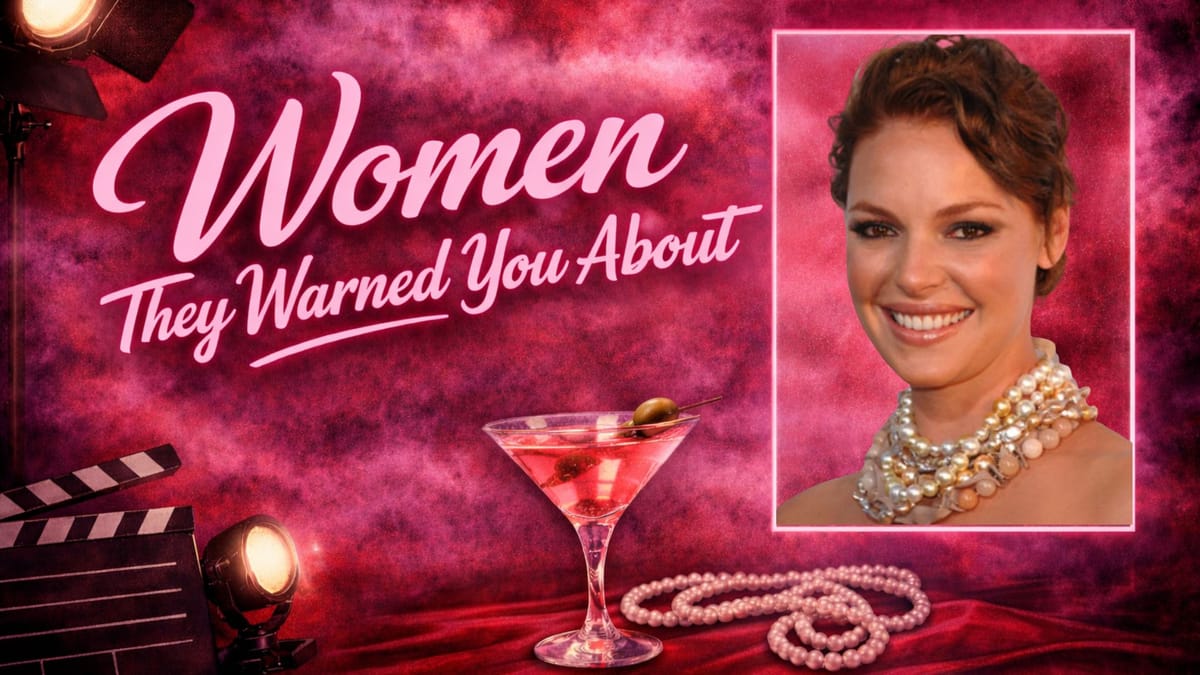
How the term difficult, and the women who have come to immortalize it, represent specific elements of our Hollywood landscape. This column, "Women They Warned You About," focuses on these stories, treading through the morass of Hollywood pop culture to illustrate how women are often forced to represent so many things. Is the word "difficult" always a career killer? How can a person come back from it? All will be uncovered.
There was one woman I knew I wanted to start this column with. One woman who, weirdly enough, even the most non-inside Hollywood person tended to think of when contemplating "difficult women": Katherine Heigl. The Grey's Anatomy actress is a staple for us millennial kids, from My Father the Hero (we'll get into that) to Wish Upon a Star, from Bride of Chucky to Roswell. But her getting the difficult label shows a lot about 2000s-era cringe, misogyny, and the ways women are often forced to apologize for setting their own boundaries.