Why MJ Is the Superior Michael Jackson Biopic
Everything you didn't like about Michael, you'll find on stage in MJ

A portion of this is available for free subscribers, but this piece is exclusive to my Gold Star Crew.
🌟Supporters like: Tamaryn, Morozco64, Bonfiglio, BJ Colangelo, Ashley Eakin, Jessi Parrott, Talleri Mcrae, LMoore, Tonia Steed, and Chelsea Meister💫
Paid subscribers are the backbone of The Film Maven who support independent journalism, as well as female- and disabled-created content. Paid Film Mavens get access to shout-outs, exclusive articles and series, Zoom mixers, and The Film Maven Discord server.
Consider becoming a paid subscriber and joining the community that invests in independent journalism free of AI and influencer opinions!
This weekend the Michael Jackson biopic (potential sequel starter?) Michael made a bucket of money. It grossed nearly $40 million on opening day alone and could easily snag $200 million globally when all is said and done. This in spite of a 38% on Rotten Tomatoes, with many critics (including myself) calling it a heavily sanitized biopic with no real point-of-view. Empire magazine went as far as it to call it a "a cosplaying tribute act." Social media has been on fire the last few days with Jackson fans emphasizing this is why critics don't matter, and critics defending themselves for doing their job.
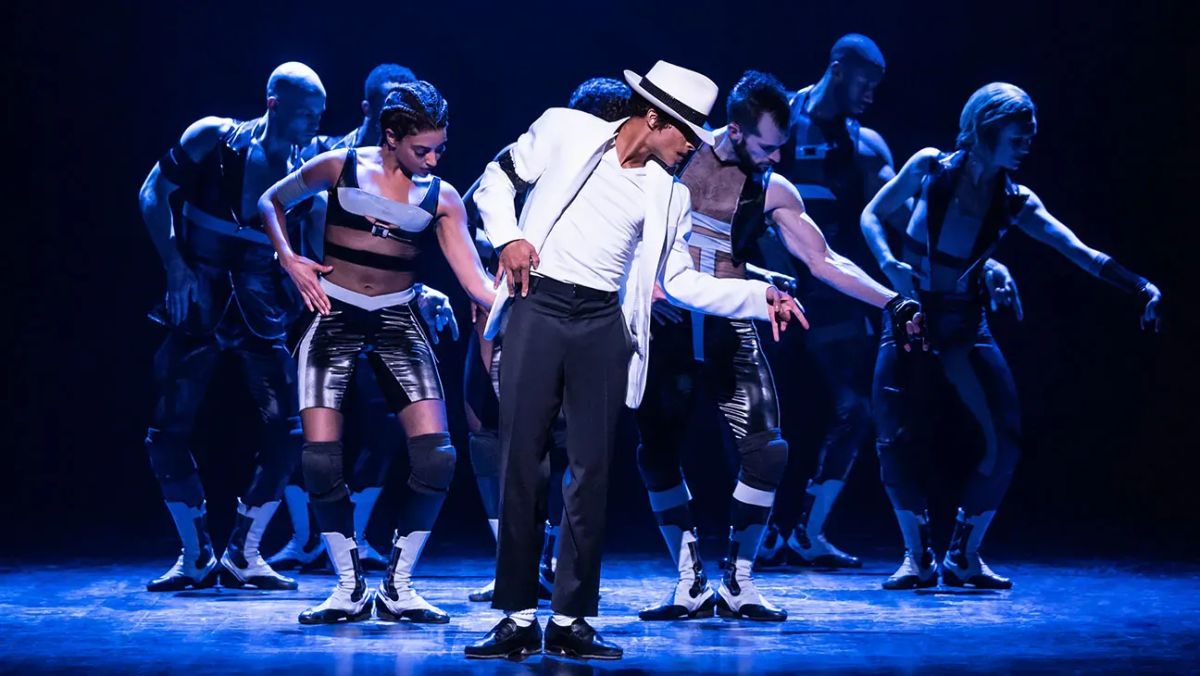
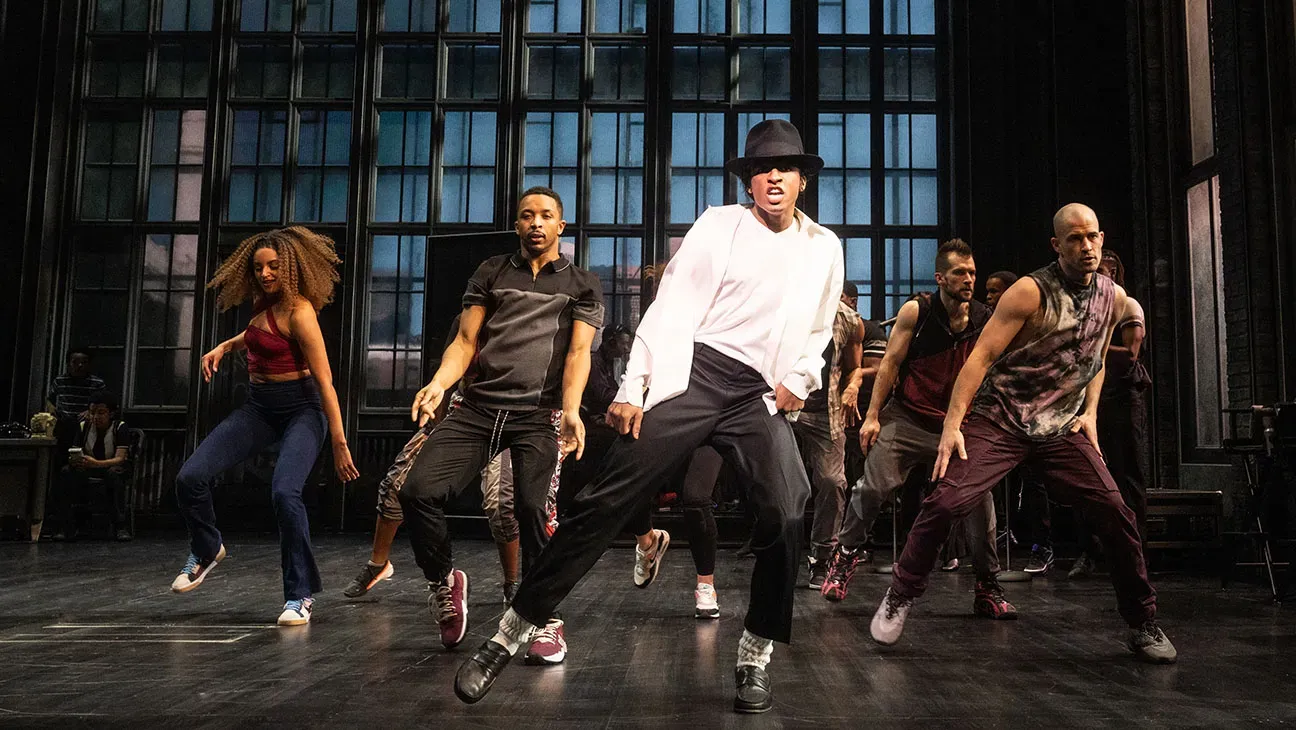
I didn't plan it this way but alongside seeing Michael last week, I also caught the touring run of MJ, the Michael Jackson jukebox musical, at the Pantages Theatre here in Los Angeles. If you have the opportunity to see it, make it a priority! Not only because it's a fun time at the theater, but because it succeeds at everything Michael failed to do. In that, it tells a nuanced story of Jackson's life that presents its larger-than-life figure as a three-dimensional person, with complexities and flaws. It's actually pretty shocking to watch it after seeing Michael as both are endorsed and financed by the Jackson estate.
Why is it one version of this story – backed and supported by Jackson's estate – is able to be honest than a big-screen movie? How does MJ tell the story better than screenwriter John Logan, the writer behind Michael? I want to dive into the specifics and, ultimately, why I think the Broadway show is far more open to being honest than the feature.
Honestly, I'm not really clear why the Jackson estate didn't just decide to adapt the musical they already own?
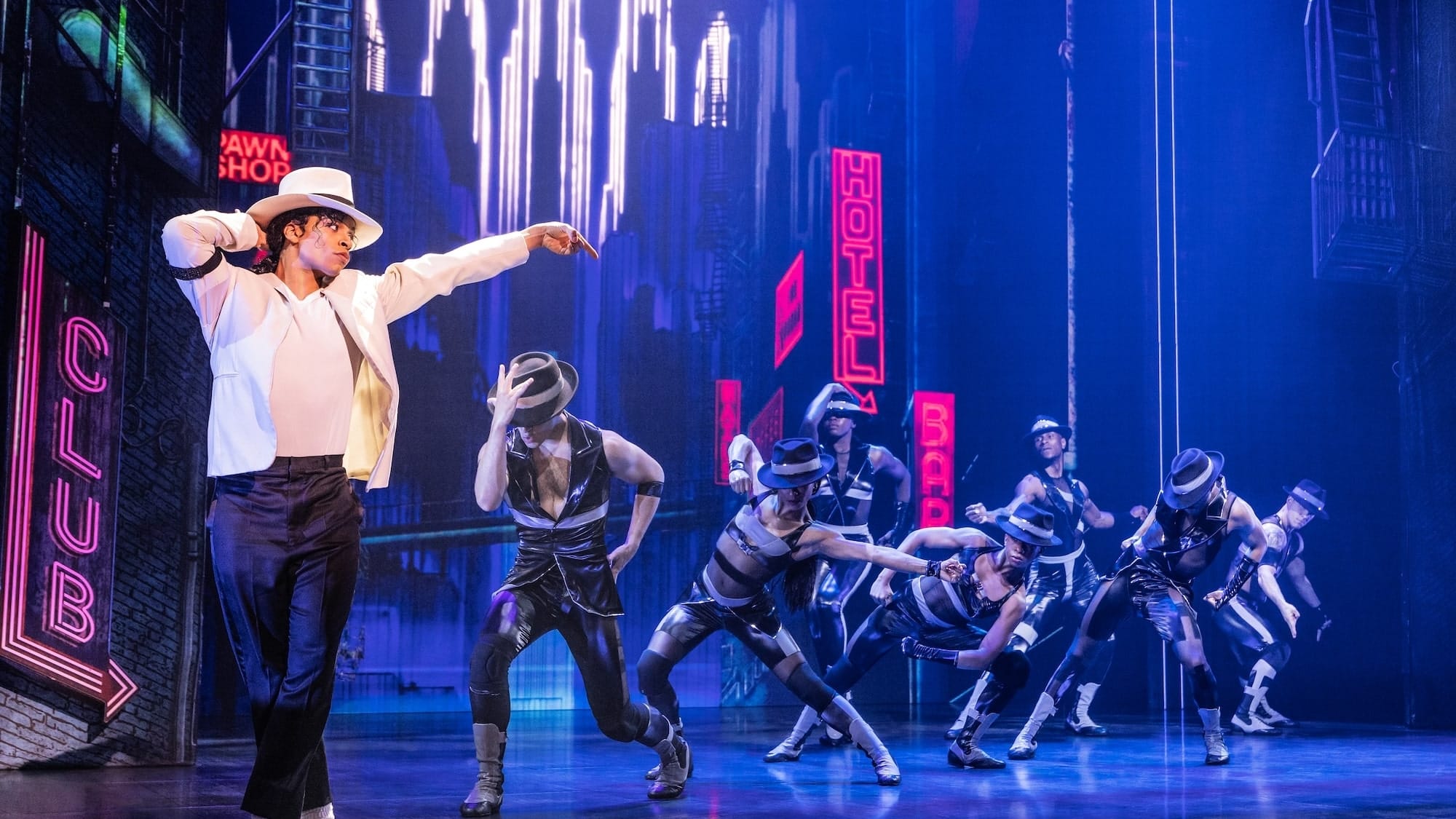
Where Michael tells a fairly straightforward childhood to adulthood storyline (ending in the late-1980s), MJ is focused on one specific moment in time: 1992 when Jackson was set to kick off his "Dangerous" tour, a highly ambitious stadium concert series wherein all the monies would be going to his Heal the World charity. The musical uses that as a launchpad to drift backwards and forward in time, hitting pretty much all the beats Michael went through, from Jackson's abusive upbringing to his 1984 accident on the set of a Pepsi commercial.
Michael Jackson: The Person
If you watch Michael, the movie presents him as a man of talent and vision, but so scared to make a decision that everyone else had to come to his defense in order to put him where he was. Movie Michael isn't responsible for anything. Even his voice is deemed as delivered by God. MJ's version of the character (expertly played by Jordan Markus) is a man struggling to remain relevant in a world he believes is passing him by. He routinely talks about being overshadowed by Nirvana and, yes, Prince. Much of the musical sees him arguing with his production manager about obtaining flashy items like a toaster lift to make the show as big and opulent as he can be, at one point even mortgaging his beloved Neverland to pay for everything.
MTV reporter Rachel, who is doing a documentary on the tour, tells MJ that "It's hard to tell your story without being personal" and that is Michael's biggest failing. It seems uninterested in telling Michael's own story, whether because it's afraid of how it might taint the brand and the family, or because they just don't know Jackson's real story. One can only tell a version of a tale if they haven't lived in that person's shoes. Even Jackson's own daughter, Paris, has gone public about how the movie is a fairy tale interpretation of his life to appease fans.
MJ's interpretation of the character shows Michael Jackson as a man who was shrewd, ambitious, a musical and visual genius. He is also scared of what could happen to him once he's no longer at the top. As he tells Rachel, growing up in the public eye means he literally has no conception of what he'd be without it. He may be the King of Pop, but MJ Michael knows it's tenuous, fleeting. He's loved one minute and hated the next, so for him all he can do is continuously strive to keep the people who love him there. The play takes the time to allow Jackson those personal moments. He discusses with Rachel his vision of the world. He's reluctant to give press conferences because he's aware that, in the end, the press really doesn't want his story. They want what sells. "The price of fame is paying the price of fame," one song says.
 Kristen Lopez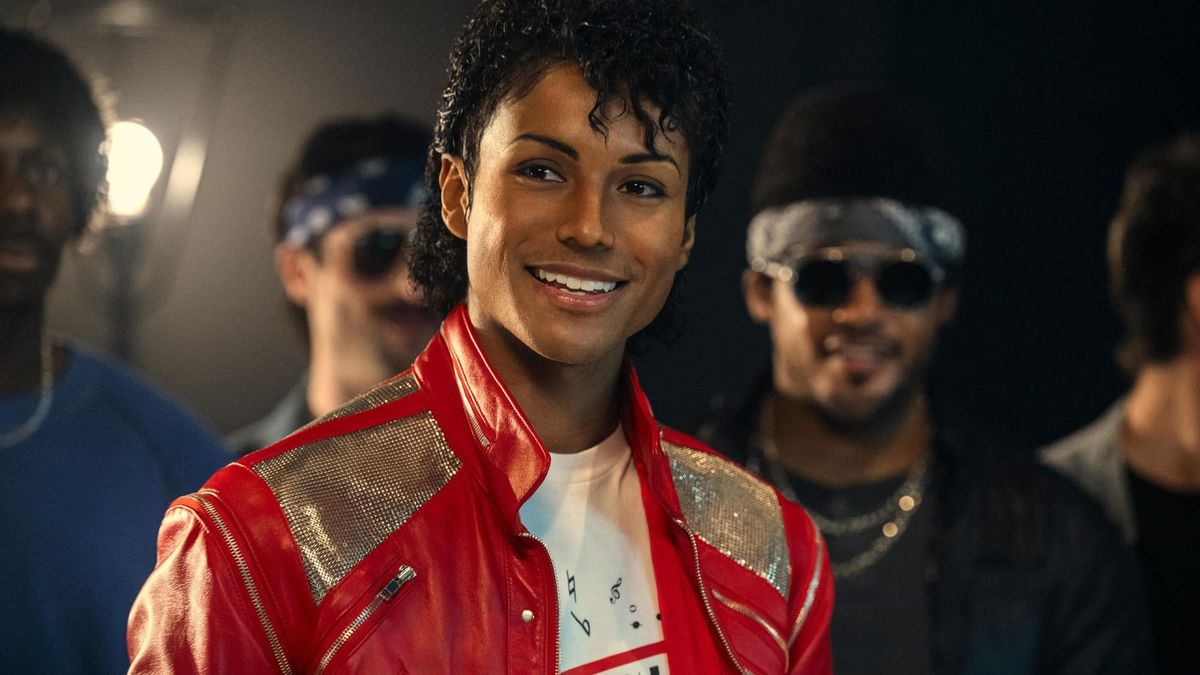
More than anything, the play also isn't afraid to say that Jackson, in his desire for perfectionism, could run himself ragged. A large part of the play is about Jackson's addiction to painkillers. But this desire to be perfect leads to MJ's most fascinating plot point: how much Jackson was like his father, Joseph. In the movie, Joseph is a cackling con-man with abusive tendencies. MJ's version of the father-son relationship is one that is constantly twisting and changing as Jackson ages. Jackson is routinely told as a child that his father's hostility and abuse is done out of love, and a desire to keep the boys out of the same life as him. Jackson understands that that isn't necessarily true, though sees that both father and son have a tendency to push others to the breaking point and that, if nothing else, Joseph has given Jackson an ambition he can't break away from.
One of the things I was asked when my Michael review dropped was what I expected. There's a misguided belief by the fans that critics wanted to see some dark story, no doubt a means of opening up arguments over the molestation allegations that continue to plague Jackson even in death. The movie itself was initially going to discuss them; having a framing device about the 1990s allegations against him cut due to a legal agreement no one seemed to know about. In MJ, the movie doesn't discuss Jackson's legal woes nor does it hide from them. During a musical sequence/press conference, the journalists scream "What about the allegations," and that's it. The audience understands what they're talking about.
So when MJ's Jackson finally tells Joseph he's going to donate all his Victor tour proceedings to the United Negro College Fund, it's a true moment of triumph compared to Michael's ending wherein Jackson just finds the most public place he can to tell his father he's done with him. MJ's Jackson is a person with a spine.
No One Has Clean Hands, Not Even the Media
One of the problems with making a biopic crafted by those who have a vested financial interest in someone's legacy is that everyone ends up smelling like a rose. One of the most hilarious moments in Bohemian Rhapsody involves Freddie Mercury partying only to have every other member of his band look at him aghast. Partying? Drugs? We're going to be in bed by 8pm with our wives, thank you very much. The same is true in Michael.
Kristen Lopez
Outside of Joe Jackson, every member of Jackson's family is presented as overly supportive and just as much a victim as Michael himself. Jackson's own attorney (and executor of his estate) becomes a key figure in the movie, played by Miles Teller no less, who is seen as Jackson's white knight.
Take that scene in Michael wherein Joseph tells Michael to do the Victory tour with his brothers. We watch Jackson's brothers sit there in silence, seemingly resigned to doing it. MJ presents this as a moment where Jackson, once again, is bullied by everyone in his family. As the entire clan, mom Katherine included, sings "For the Love of Money," Joseph tells Michael that if he doesn't tour with them Jermaine will sing for him, to which Jermaine smoothly says he totally will. "Money, Money, Money!" It's MJ's most acerbic moment and it is remarkable the family was cool with it.
Katherine routinely tells Michael how much he needs to appreciate his father, that Joseph is doing things out of love and because he wants to better the family. We watch Katherine and Joseph routinely arguing, potentially for Joseph's cheating, which we also see happen several times in the show. Even those like Quincy Jones and Berry Gordy, founder of Motown, are written as men so desperate to hold onto Michael (to fuel their own success) that they refused to let him grow up. Mind you, Jackson himself is also seen as a man so determined to be great he was more than willing to leave past collaborators behind.
Even MTV, with Rachel as the surrogate, is presented as complicit in bullying Jackson. More content to focus on his pill addiction than learning about the real man.
So What Happened With the Film?
I've gone back and forth on why this movie, financed and put together by the same people who put together the movie, would be content with MJ having a more authentic story than Michael. The only thing I can think of is the idea that less people see Broadway shows than do movies. As we've seen with other true-life events, movie audiences won't necessarily do research and assume the movie is real life.
That, and I think the musical biopic formula has made estates far more content to fudge the truth. If the real person isn't alive, and no one else is going to complain, then who gets hurt? All it does is create cardboard cutouts of real life people.
Do I think there's a world where Michael could have been good? Possibly. Though with figures who were so larger than life (Jackson, Princess Diana, even Grace Kelly), it's near impossible to craft anything that isn't going to be an interpretation of their lives. It's why Rocketman worked so well. Elton John, the subject of that movie, was still alive and was willing to show his life, warts and all. When you're dead, the impression of you will always pass through a sieve, with the best and worst bits cherry-picked.
This is all to say, if you have the opportunity to see MJ in your town, take it! It's a far more nuanced interpretation of an icon than Michael (Part 1?).
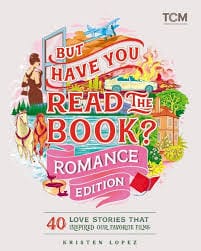
I have a new book dropping on July 28th! It's But Have You Read the Book: Romance Edition! I look at 40 of the most iconic romance novels and their filmic counterparts to show you the changes in between. Preorder your copy now!
🌟Come Join Us on Discord!🌟 Chat about entertainment, writing, anything with other Film Maven Gold Star Crew.
The Gold Star Referral Program is Live. Refer Friends, Get Rewards!
Want to Work Together? Improve Your Disability Representation? Learn to Pitch? Book a Consult With Me.


![Thomasin McKenzie Reveals the Dark Backstory She Created for The Uprising [Video]](https://storage.ghost.io/c/24/37/24372e80-8819-45cd-8a9d-4dbc679f7337/content/images/size/w600/2026/09/1.png)