Popcorn Disability: 'Ice Castles' (1978)
I'll never forgive "Love Story" for the string of disabled pap crafted in its wake
Popcorn Disabilities is my new upcoming book looking at disability in the movies coming out in 2025. As a prelude to that, I’ve decided to review some of the movies I’m watching as I work on the book. Some these will eventually make their way into the finished product and some won’t.
A portion of this is available for free subscribers, but this piece is exclusive to my Gold Star Crew of Silver and Gold Film Mavens. Supporters include: Ashley Eakin, Jessi Parrott, Talleri Mcrae, LMoore, Tonia Steed, Chelsea Meister, Josh Hornbeck, Julia Mazza, Kathia and Alcmatta
Paid subscribers are the backbone of The Film Maven who support independent journalism, as well as female- and disabled-created content. Paid Film Mavens get access to shout-outs, exclusive articles and series, Zoom mixers, and The Film Maven Discord server.
Consider becoming a paid subscriber and joining the community that invests in independent journalism free of AI and influencer opinions!
I’m currently working on a chapter in my book on gender and the distinctions in relationships based on disability. In sum, movies present women with disabilities as usually always having some type of facial disability, but nothing so damaging to their looks that they aren’t hot or that an abled/sighted/hearing actress can’t play them. Read my piece on Johnny Belinda as a good primer.
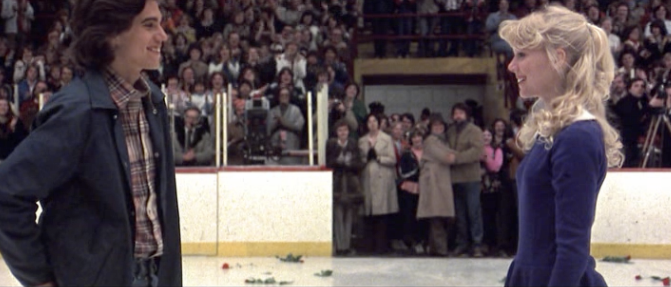
So I’ve spent this week watching a lot of beautiful actresses play blind, deaf, non-verbal or some combination thereof. (And, men, don’t worry, I’ve got a movie to discuss that stars you in this stripe to discuss later.) Today’s movie, though, is the apotheosis of a lot of the stereotypes that plague those who have, as I’ve coined it, “pretty disabilities. Ice Castles is the tale of a beautiful athlete who becomes disabled and through tough love — really, just a guy yelling at her a lot — is able to transcend her disability to win.
The 1970s loved these types of movies thanks to the 1970 feature Love Story, a similar story of two people on opposite tracks in life who fall in love only to discover the female lead is disabled; in this case, Ali MacGraw’s character gets cancer, beautifully, and dies leaving poor Ryan O’Neal to a life of…being Ryan O’Neal. But the massive success of Love Story inspired Hollywood to make other movies about doomed couples, although they must have realized killing off a lead in every movie would get repetitive so they just gave all the women disabilities. The 1975 feature The Other Side of the Mountain — which I also watched — tells a similar story as Ice Castles, albeit it’s based on true events and the woman becomes paralyzed.
![Renate Reinsve Was Asked Not to Know the Truth in Fjord [Video]](https://storage.ghost.io/c/24/37/24372e80-8819-45cd-8a9d-4dbc679f7337/content/images/size/w600/2026/10/1-3.png)