Devil Wears Prada 2 Review: Meryl Streep and Anne Hathaway Try to Save Journalism in Wacky, Unfocused Sequel
The attempts to string the plot together runs out of steam quick, and no amount of cameos and Lady Gaga performance can save it.

This post is free to enjoy but it's worth it to become part of my exclusive Gold Star Crew of Silver and Gold Film Mavens.
🌟Supporters like: Staskelv, S. David Miller, William Bibbianni, Scott Mendelson, Cameron Curtis, Virginia Yapp, Don Comm PR, Angel Giuffria, Tari Hartman Squire, and Dkod💫
Paid subscribers are the backbone of The Film Maven who support independent journalism, as well as female- and disabled-created content. Paid Film Mavens get access to shout-outs, exclusive articles and series, Zoom mixers, and The Film Maven Discord server.
Consider becoming a paid subscriber and joining the community that invests in independent journalism free of AI and influencer opinions!
No movie encompassed the myth of journalism better than the 2006 adaptation of Lauren Weisberger's novel The Devil Wears Prada. In that movie, burgeoning female journalists learned that all one had to do to succeed was take on a boundary-defying, toxic boss head-on and, by doing so, said boss would eventually come to respect them. (I say all this as someone who loves the original film and watches it on the weekly.) Twenty years has passed and The Devil Wears Prada 2 seeks to show us not only what has happened to Meryl Streep's dragon lady Miranda Priestley, but also try to rectify some sins from the aughts. Something star Anne Hathaway has been vocal about.
Unfortunately, The Devil Wears Prada 2 only seems to prove how uncomfortable and boring Priestley would be in this new world of pronouns and unionizing. That, coupled with a narrative that struggles to balance a cadre of half-baked plot lines, makes it hard to prove this movie was little more than a vain attempt to continue to mine the millennial nostalgia train. Outside of a rather sober exploration of journalism today, Devil Wears Prada 2 coasts on little more than a love for the original, devoid of much humor, heart, or narrative trajectory. While Streep and Hathaway remain committed to the characters, the rest of the movie is definitely destined for the bargain bin.
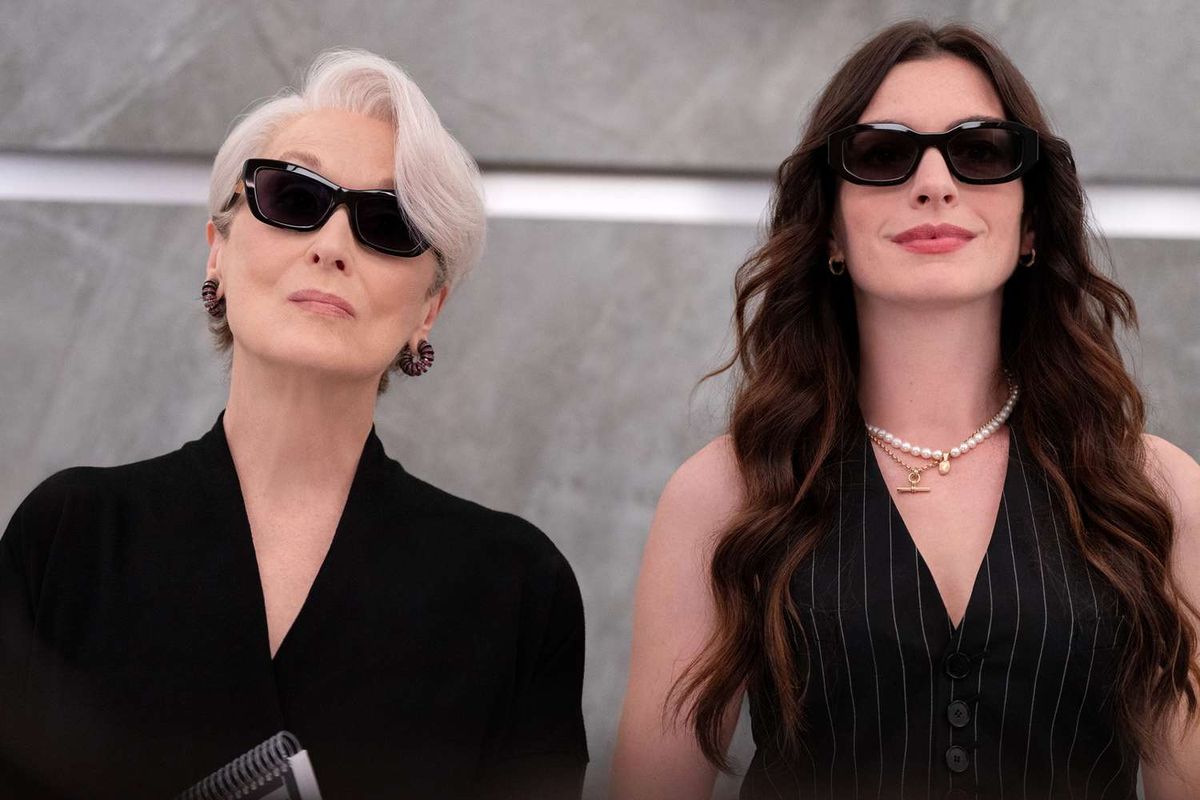
Andy Sachs (Hathaway) is an award-winning writer for the New York Vanguard. But when her paper folds up and lays everyone off, Andy is adrift at what to do. A controversy involving an article about sweatshops puts Miranda Priestley (Streep) and Runway magazine in hot water, and the hope is that Andy's journalistic integrity can fix things. But Runway is in more trouble than meets the eye, forcing Andy and Miranda to team up if they want to keep their jobs.
That above synopsis is the broad strokes as original screenwriter Aline Brosh McKenna seems to have various ideas she's interested in exploring, but a lack of clarity in how to move things from A to B. We meet Andy as she's winning an award for journalism at the same moment her and her colleagues are being fired via text message. Andy proclaims on the dais of the award ceremony that "journalism fucking matters" and, for the first quarter of the movie, the script seems interested in examining the current state of journalism today. You could say, "Journalism is Fucked and We're All Doomed!"
There's certainly some interesting material to mine here. How does a magazine like Runway – content to showcase haute couture that no one can afford, a relic of an era that seems so far away – survive? (Weirdly enough, Runway doesn't go the Vanity Fair route.) How does one struggle to retain advertisers when they're going digital? Andy even struggles to balance writing stories that make an impact, yet aren't yielding massive traffic jumps once she's at Runway. These are all tough topics without easy answers so once Andy is established at Runway they all take a backseat to a more easily solved plot of finding someone to buy Runway rather than close it.
Little seems to have changed with Andy, short of her being single and being an actual journalist. She still lives in a New York apartment with brown water coming out of the sink, and is so blindly desperate to have Miranda like her. There's some belief that saving Runway might do something to save journalism as a whole, or at least give Andy the opportunity to write important articles and hire her former work colleagues, but in twenty years there's still a lot of naivety in the character that doesn't work as well.
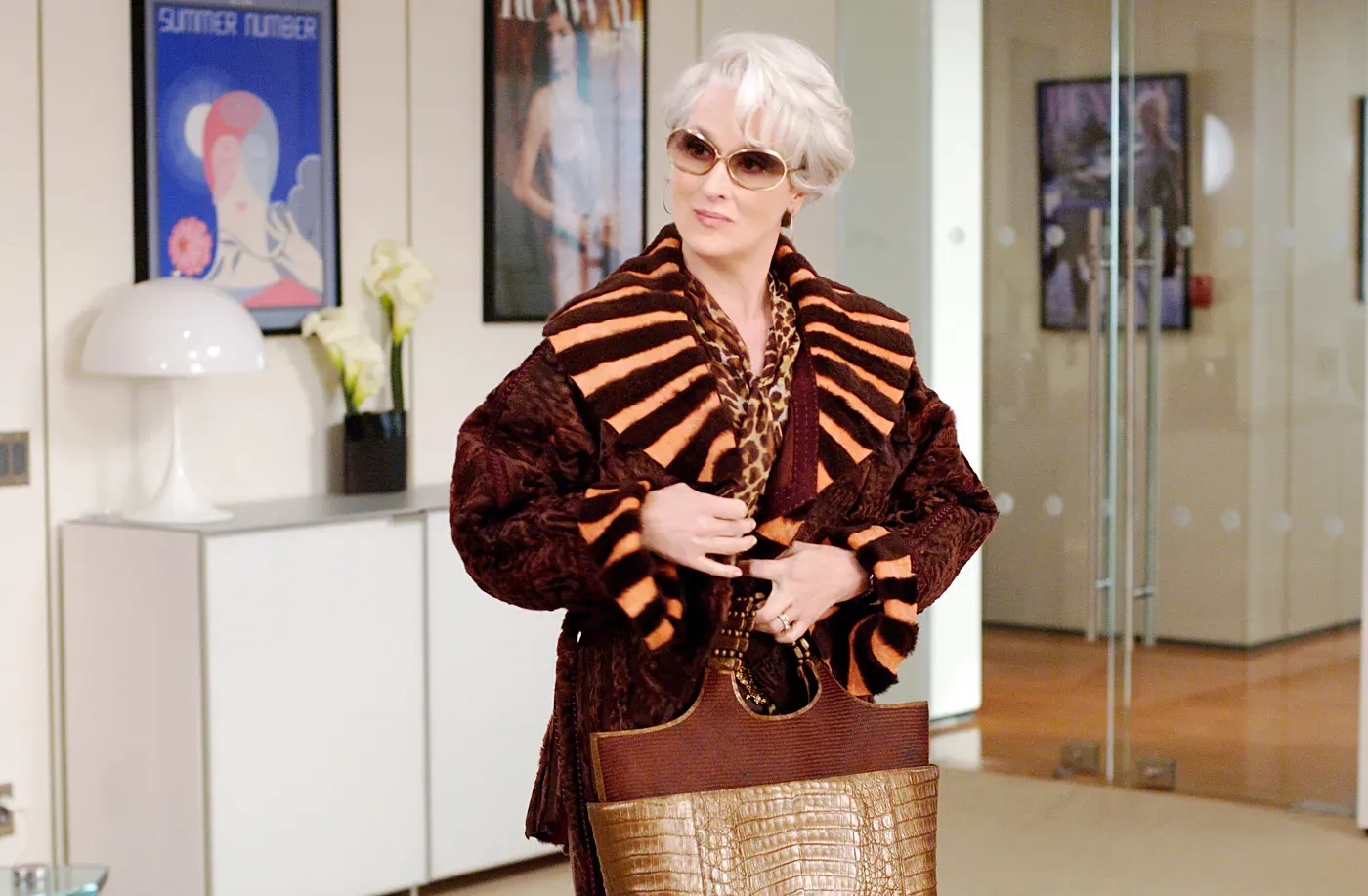
But there seems to be a similar stuck in their ways mentality to all the characters. Time may have passed, characters might look older (though that's relative, being Hollywood), but there's little growth to any of them. Streep seems particularly adrift or disinterested as Miranda Priestley. Heavily inspired by Vogue editor Anna Wintour, the first movie allegedly rankled Wintour when it dropped but, since then, the hatchet has seemingly been buried. So much so that there's almost a fearfulness to make Miranda a character who will offend. Much of Miranda's signature snobbery is gone – there's not one "that's all" uttered the entire movie – and in its place is a character who feels lost to time. She's chronically shushed by her assistant Amari (Simone Ashley) when trying to make comments about people.
There's a running joke about Miranda not remembering the events of the first movie, and that gets old fast. Particularly as she feigns unawareness of best friend Nigel (Stanley Tucci) wanting any type of promotion. When Andy gets the opportunity to score a major interview with a celebrity philanthropist, Miranda doesn't believe she can. Andy obtained and hand-delivered the final Harry Potter manuscript in the first film, yet her and Miranda both act as if Andy can't accomplish much of anything.
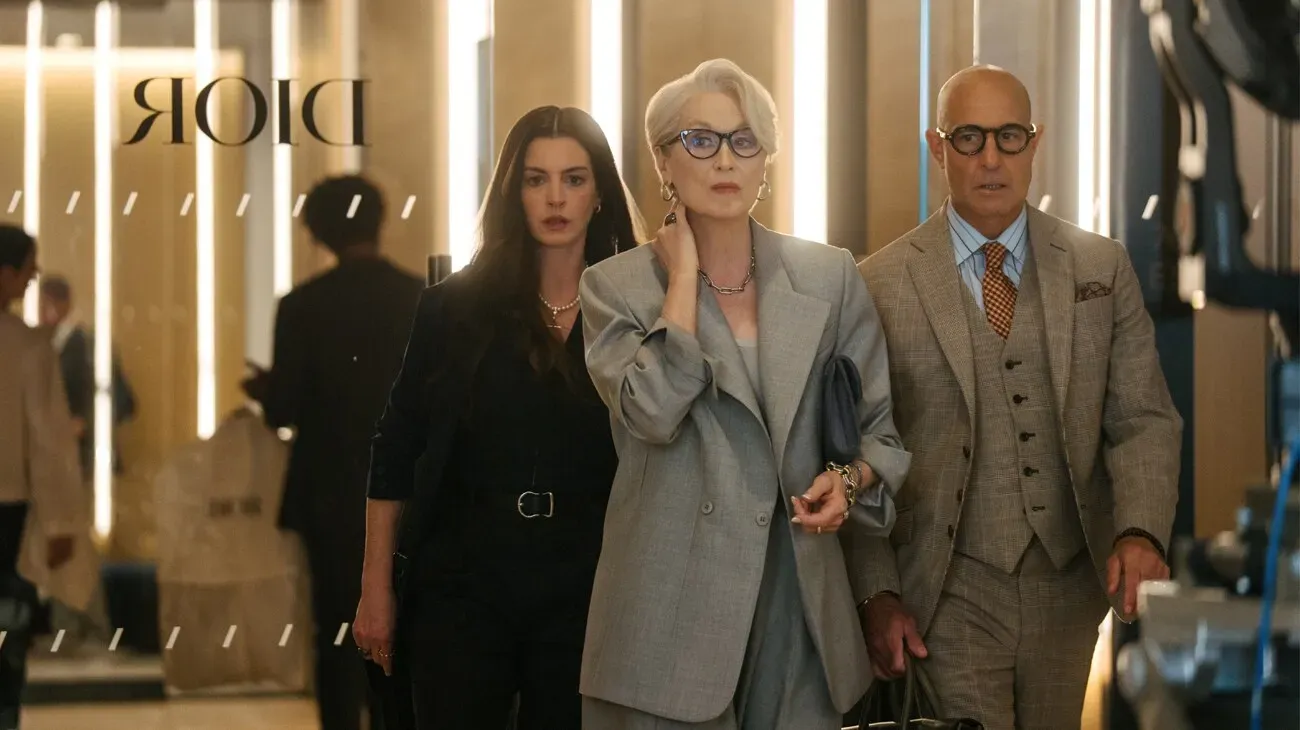
The film's second half sees her take an active participant role, being dragged along from scene to scene. The film's middle half sees her struggle to deal with new Runway owner Jay Ravitz (B.J. Novak at his bro-iest). Moments of her personal life, particularly her new marriage to the kindhearted Stuart (Kenneth Branagh) are more focused on giving screen time to Branagh who is in a pretty thankless role.
For a movie that focuses so heavily on the capitalism of buying and selling Runway, the movie seems confused about Priestley's own role within that world. She reiterates to Stuart that she doesn't who she is without Runway, to which he brings up her children and generally being an ultra-successful (and wealthy) person. But there's no world that is presented as a worthy option for Miranda and thus no real stakes to her decision making. Her sticking with Runway till she's dead is pretty much a foregone conclusion.
It is funny to see the male characters here presented as flat and one-dimensional as a girlfriend in a 2000s-era movie. Branagh is nice to see, but you'd be hard pressed to remember his character's name. I did, and I saw the movie last night. Similarly, Andy starts dating an Australian realtor named Peter (Patrick Brammell) who disappears often, so much so that when the two reunite you'll say, "Oh....that guy."
The movie's harshest criticisms towards journalism, fashion, and wealth are reserved for Emily Blunt's former first assistant Emily. The character actually has some extremely interesting plot points including a contentious relationship with an ex-husband and two children she has....some type of relationship with. But instead of focusing on these human elements the movie casts her as a not so thinly veiled take on Lauren Sanchez Bezos, with a hammy Justin Theroux playing a version of Amazon founder Jeff Bezos and Lucy Liu as Bezos's first wife, Mackenzie Scott. There's no subtext or satire here. They are presented as these people yet....Emily's motive is meant to be more of a revenge take on Miranda. The whole thing makes little sense, even less so when the goal is to eventually unify her and Andy.
The first Devil Wears Prada was certainly an artifact of the 2000s and this sequel is too, in that it's a soul-less nostalgia grab with some interesting opinions it doesn't really want to dive into. Everyone is enthusiastic and the movie is bouncy enough that, for at half of its two-hour runtime it's enjoyable. But the attempts to string the plot together runs out of steam quick, and no amount of cameos and Lady Gaga performance can save it.
Grade: D+
The Devil Wears Prada 2 is in theaters Friday.
You just read this for free! Here's what you missed by not becoming a Gold Star paid subscriber starting at just $4 a month or $30 a year:
- Access to all my paid content and exclusive series like:
 Kristen Lopez
 Kristen Lopez
- Shout outs on my newsletter when you join and whenever you have something you're launching.
- Included on my Gold Star Crew list
- Bi-Monthly Zoom Mixers where we can talk entertainment, get advice on journalism, and generally discuss the world.
- Access to our Discord server where we can chat about movies and entertainment. It's also where I host my yearly Golden Globes and Oscar watches.
- Participation in my new Film Maven Secret Santa Gift Exchange (launching November 2026), book clubs, and film discussion groups (launching later this year)
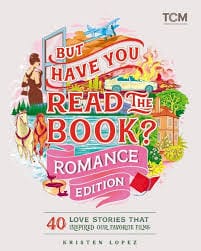
I have a new book dropping on July 28th! It's But Have You Read the Book: Romance Edition! I look at 40 of the most iconic romance novels and their filmic counterparts to show you the changes in between. Preorder your copy now!
Want to Work Together? Improve Your Disability Representation? Learn to Pitch? Book a Consult With Me.


![Thomasin McKenzie Reveals the Dark Backstory She Created for The Uprising [Video]](https://storage.ghost.io/c/24/37/24372e80-8819-45cd-8a9d-4dbc679f7337/content/images/size/w600/2026/09/1.png)
