How Liz Sargent Put a Disabled Actor at the Center of Her Film and Got Out of Her Way [Exclusive]
"We didn't baby her," Sargent says about her lead (and sister) in TAKE ME HOME.

![How Liz Sargent Put a Disabled Actor at the Center of Her Film and Got Out of Her Way [Exclusive]](https://storage.ghost.io/c/24/37/24372e80-8819-45cd-8a9d-4dbc679f7337/content/images/size/w1200/2026/10/1.png)
A portion of this is available for free subscribers, but the full article (with the best bits) is exclusive to my Gold Star Crew members.
🌟Supporters like: William Bibbianni, Scott Mendelson, Cameron Curtis, Virginia Yapp, Don Comm PR, Angel Giuffria, Tari Hartman Squire, Dkod, Debann, and Matthew Jackson💫
Paid subscribers are the backbone of The Film Maven who support independent journalism, as well as female- and disabled-created content. Paid Film Mavens get access to shout-outs, exclusive articles and series, career mentoring, Zoom mixers, and access to The Film Maven Discord.
Consider becoming a paid subscriber and joining the community that invests in independent journalism free of AI and influencer opinions!
Liz Sargent's Take Me Home is not your typical caregiver narrative. It's not quirky. It doesn't put the abled caregiver front and center. And it doesn't offer an easy solution like a wealthy disabled person to make everything right at the end. Instead, it's an authentic, painful, and real examination of the struggles both the abled and disabled have when it comes to living independently. In the story of Anna (Anna Sargent, Liz's real-life sister), a young Florida woman with cognitive disabilities who lives with her elderly parents, it's an examination of the challenges of living in a world where questions of mortality aren't discussed. It's also a movie where a disabled woman is the lead of the movie.
"Anna was the soul of this film," Sargent tells The Film Maven. In a landscape where Hollywood routinely decries the lack of disabled actors, or claims hiring an unknown are impossible, there was never any hesitation that Anna Sargent would be the lead. Take Me Home had initially started as a proof-of-concept short film, also starring Sargent. So when the time came to make the feature, it was a natural progression to retain her. "When we did the short film, it was a bit of an experiment," Liz Sargent says. "We told her she was going to be in a film but what does that mean to anyone? What a strange idea!"
With Anna in the role, she became just an actor. It wasn't about lowering expectations to accommodate her, but rethinking what support and professional expectations looked like for her. "We didn't baby her," Sargent said. "She was number one on the call sheet. She did twelve-hour days." In a way, the movie acted as another proof-of-concept, to show that there's no good excuse not to hire disabled talent of any stripe for cinema. "It's not because they're not competent and they can't do it," Sargent said. "We just have to adjust the way we're making it a bit. That was a big part of why I wanted to make this movie, and prove that Anna was engaging and could hold a film."
Liz Sargent understands the tricks Hollywood employs when it comes to telling disabled narratives. More often than not the stories employ, what I've termed in my book Popcorn Disabilities, an able-bodied buffer. The movie may have a disabled character, but the story is actually about the abled person and how, through interacting with disability, they grow as a person. "It's actually rare to have a real, true disabled lead who is number one on the call sheet," Sargent says. "We might market it that way, but it's rare for [them] to actually be holding the film." She explained that mainstream movies often center the sibling relationship on the burden the disabled person is.
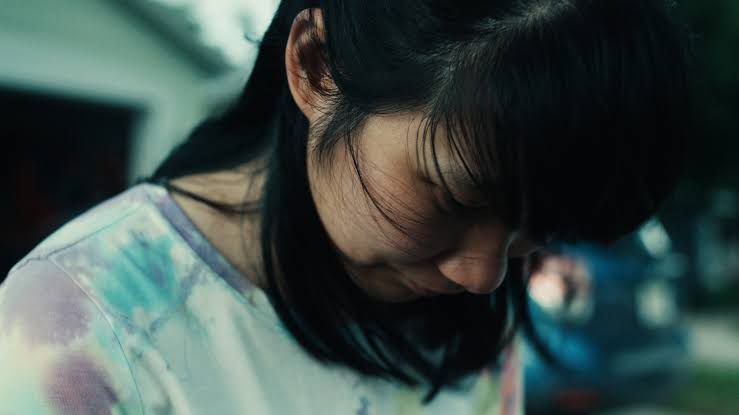
"Sometimes around disability there is a glowy lens of preciousness that sometimes detracts from the humanity," says Ali Ahn, who plays Anna's sister Emily in the film. For Ahn, she loved that there was tension between all the characters. Anna may fight with her sister, but so does their father. The characters aren't sanitized to make disability palatable. Anna herself is, at times, funny, angry, frustrating, and difficult. Like any good family, irrespective of disability, things are messy and often swathed in personal history the viewer isn't aware of. And yet, watching Take Me Home, it's striking how Anna is in almost every scene. She's always in the frame. And that's intentional towards asserting that she is the star of this film. "We really wanted to center that and make sure that her voice wasn't lost," Sargent said.
It's also worth pointing out how rare it is to see disabled Asian women in cinema. According to the most recent Annenberg Inclusion study, of the 1600 most popular films, just 8.8% of disabled characters were Asian. Though considering that 69.4% of all disabled characters on-screen were male it's not listed how much of that 8.8% were women. Both Liz and Anna were adopted, and there are poignant conversations in the movie about their parents, both white, adopting them (and adopting disabled children). "It was a question that I talked with Liz about a lot," said Ahn when discussing that scene. "I was nervous about the tone of it. But I do think that I looked at it as a moment of accountability. Not saying you should not, but why did you do it without considering all these things? What is the future?"
In 2015, Sargent attempted to make a documentary about her family – Anna is the youngest of eleven – yet struggled with how many people asked her to question her parents about their intentions. "Why would they adopt all these children? Why would they adopt disabled children? The way that they asked me put so much blame on my parents," Sargent said. "I asked my father this question and he did the exact thing that's in the movie. He snapped at me. He was sick of being asked this question in a way where he was blamed for having a big heart and being fully dedicated to his daughter, and that really moved me."
Once Take Me Home started filming, Sargent didn't just have to start putting together an entire feature. She also had to work in a way that Anna would be comfortable on-set. Too often, the accommodations needed for disabled performers is cited as being cost prohibitive. Not true, says Sargent. "There's a way to use critical thinking and creativity with a budget," she said. "When you [look at] this budget and compare it, it's equal to somebody else's budget because there's a lot of celebrities that require certain kind of adjustments and support staff. Honoring Anna as a lead, and giving her the support system to be a professional, is similar to other budgets." The budget wasn't higher because Anna was disabled, it just required different decisions about support.
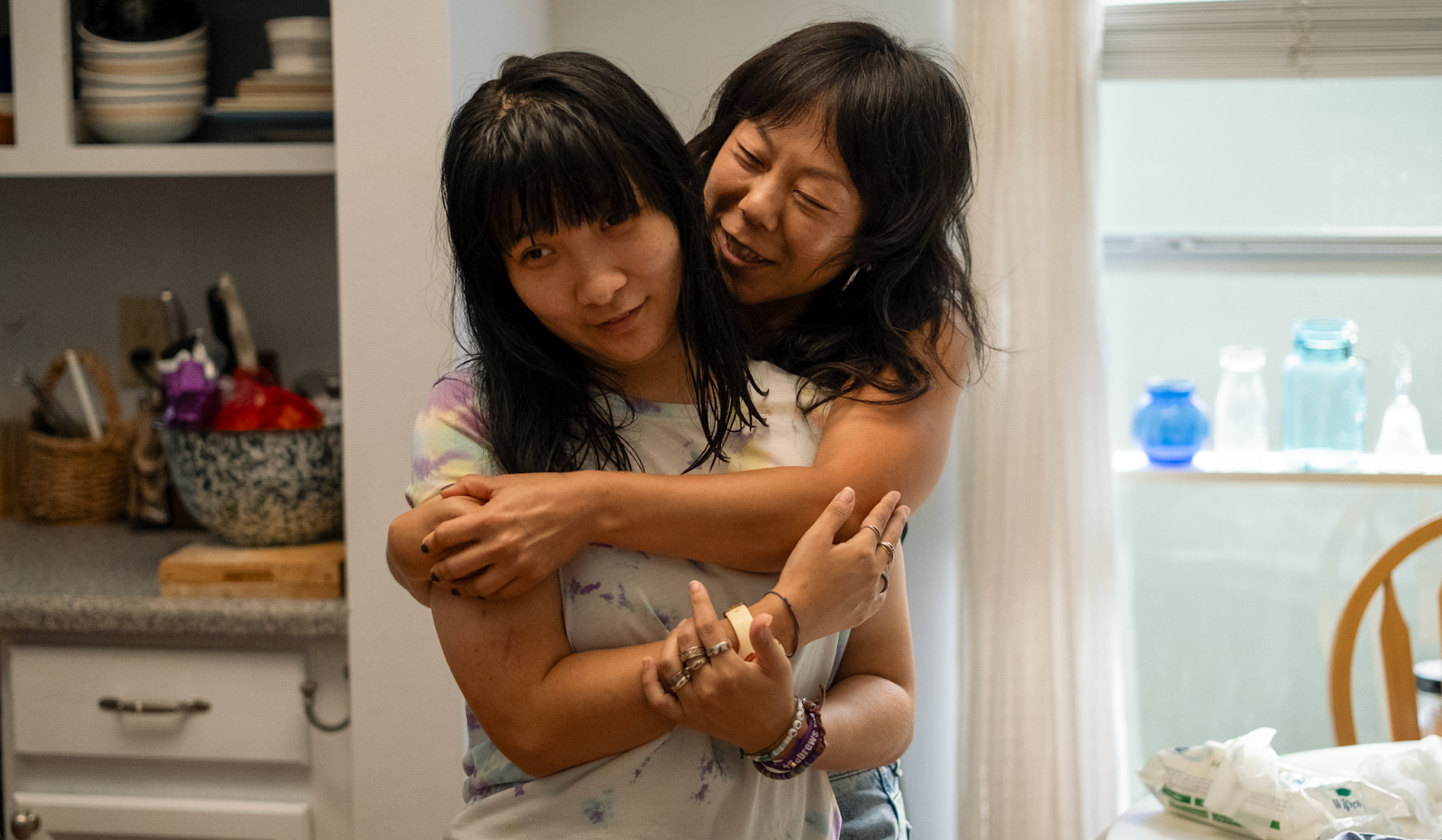
In this case, Sargent, used structure improv, prioritized time over setup, and gathered a cast open to working collaboratively with her. Anna was provided an acting coach, Terra Mackintosh, as well as having an accessibility producer on-set. "Our whole process revolved around Anna and creating an environment where she could really thrive and have ownership," said Sargent. Mackintosh has been working with disabled performers for a while, having worked on the Zeno Mountain Farms production Best Summer Ever, which boasted a predominately disabled cast. "Every actor needs something different in order to do their best performance," Mackintosh said. "So much of my work as an acting coach, no matter whether the actor has a disability or not, comes down to giving people permission to play, permission to be silly, to make big choices, to fail, to try again."
One scene that shows off Anna's talents, as well as her work with Mackintosh, comes in a sequence between Anna and Ahn. Ahn's Emily has just washed Anna's favorite shirt, sparking an argument between the two. "I started to work with her on rehearsing each of the scenes that she's in, somatically," said Mackintosh. "For Anna, we started with 'let's walk through each scene.' I would help her with the lines so that she would start to feel in her body, this is what this character is going through in this scene, and this is where they get to at the end, and this is the next feeling. What was really remarkable about Anna is she is such a natural caregiver, and she's so sensitive to other people. If I gave her a note, or a direction, and I made it about the other actor, that was a note that really worked for her."
 Kristen Lopez
According to Mackintosh, she was quick to realize Anna didn't need help when it came to comedic timing. "She is one of the funniest people I've ever met, and she can access anger really easily, which is such a strength." This brings us back to the sequence with the favorite shirt. It's a moment where Anna is required to be angry, yet yields some great moments of humor. "[Anna's] very upset about it and, later in the scene, after she exits the kitchen she's yelling off screen 'I hate you!,' and yelling at Allie," said Mackintosh. "That was all improvised. She's one of the best improvisers I've ever seen because she lives so fully in the moment. I think her disability makes her such an extraordinary actor because nothing is premeditated. She's responding to exactly what's happening in the moment."
Of course, that work didn't end when the scene did. Because Anna was playing a version of herself, the team worked to distinguish the character's emotions from Anna's real-life experience. "We're leaving Anna in the movie and we're coming back to Anna in real life, and they are separate," said Mackintosh. "I really wanted to make sure that she had a safe space after these big emotional scenes to shake it out, be silly, let it go, so that she wasn't carrying that with her." After particularly intense scenes, they would use music, snacks, tactile objects, breathing exercises and walks to help Anna transition out of the role. To be clear, this isn't that disabled actors inherently require special emotional care, but that the team paid attention to Anna's individual needs and built a plan around them.
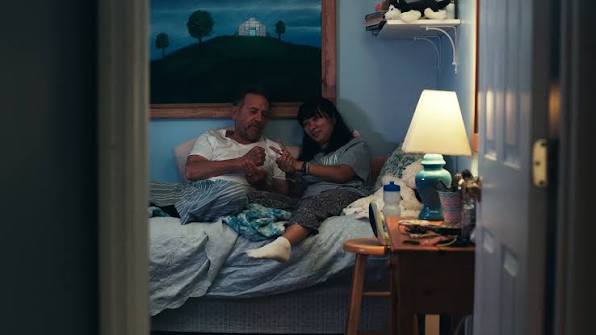
"There is a stigma around working with actors with disabilities, and I think it always comes down to fear," says Mackintosh, and she isn't wrong. In a world where we have this, Being Heumann, and the work being done by Steve Way in Hulu's Furious, it's hard not to feel like we're on the precipice of something regarding disability representation. "There is an untapped wealth of talent that hasn't fit into this mold, and they have a remarkable gift and stories to be told that resonate with the entire world," Mackintosh said. If anything, it is traditional approaches to acting education and filmmaking that need to be more creative for fear of excluding others. "It was just incredible to see how alive [Anna] became and how much ownership she had in space and in the world," said Sargent. As Sargent explained, doing this role has made Anna more confident and, no doubt, watching her performance could very well give that confidence to other disabled people.
Every film doesn't need to use the exact same process as Take Me Home. Filmmakers should stop treating one rigid production model as the only way to make a movie. Mackintosh sums it up perfectly: "The movie is remarkable because of Anna, not in spite of the way that she needed to work.”
Take Me Home is in theaters now.