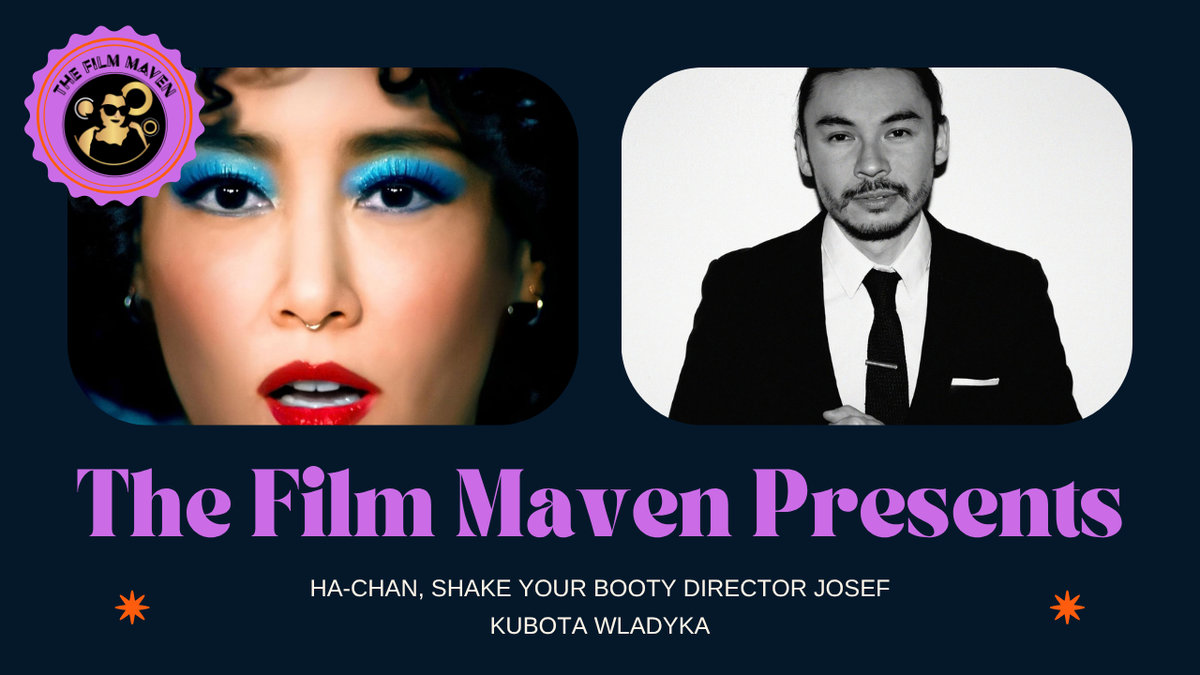
How Director Josef Kubota Wladyka's Mom’s Love of Ballroom Dancing Inspired His Latest Film

This post is free to enjoy but it's worth it to join my exclusive Gold Star Crew of Silver and Gold Film Mavens.
🌟Supporters like: Alexandra Bowser, Jacob Haller, Melissa Heeney, Mitch Santell, Jeremy Scholl, Naomi Nelson, Sarah E Wethern, Matt McDaniel, Sofiya Cheyenne, and Wiley Sutton💫
Paid subscribers are the backbone of The Film Maven who support independent journalism, as well as female- and disabled-created content. Paid Film Mavens get access to shout-outs, exclusive articles and series, career mentoring, Zoom mixers, and access to The Film Maven Discord.
Consider becoming a paid subscriber and joining the community that invests in independent journalism free of AI and influencer opinions!
Movies are always a personal project, but for director Josef Kubota Wladyka's Ha-Chan, Shake Your Booty! it was even more personal. During the film's closing credits a dedication to Wladyka's mother appears. "The film is not a biographical film, but it's sort of an homage to the spirit of my mother," he tells The Film Maven. Without her, Wladyka said he wouldn't be a filmmaker at all. "She's loved cinema. She always was taking me and my brothers to watch films when we were younger." His mother was also a lover and participant in ballroom dancing, something she's still doing at 82 years young.
And that's the magic of watching Ha-Chan, Shake Your Booty!, the belief that anything is possible and people can rise above some of the most traumatic parts of themselves. In the case of the film, Haru (Rinko Kikuchi) turns to dance in order to cope with the loss of her husband. His mother became the anchor, in a way, to the story. "I'm the youngest of three boys and my mom had to raise us on her own," Wladyka said. "She went through some hard times but she always says the thing that saved her life, the thing that kept her going and pulled her out of all the dark times, was dancing. That's the whole idea of the film. Never stop dancing. There's ups and downs in life, and it's messy, but you should always keep moving forward."
Ha-Chan is a movie that doesn't have a specific genre, according to Wladyka, combining the likes of comedy, romance, and drama. "It's sort of its own thing," he said. That being said, there was a desire to pay tribute to the dance films of the past. "I made a list of films, not that we were trying to replicate but to connect with our souls for the film." The most obvious one was Bob Fosse's All That Jazz (1979), which also makes an appearance as a poster on the wall. Other reference points included Baz Luhrmann's Strictly Ballroom (1992) and Shall We Dance (1996), the latte one of his mother's favorite movies. "You can see all that stuff swimming in around the DNA of the film," he said.
Much of the movie's fantastical nature is found in Haru's rich imagination. A variety of fantasy sequences, some feeling more literal than others, pop up through the movie. This required a way to delineate what was happening in fantasy versus reality. "We definitely spent a lot of time thinking about how do we go into her head," he said. "A lot of times we would use practical effects, like a zoom and lighting changes and a spotlight. We were very meticulous with that." None of the cast had ballroom dancing experience so everyone engaged in a four-week rehearsal bootcamp. This allowed Wladyka and his cinematographer, Daniel Satinoff, to figure out how to blend the fantasy dance sequences with the real ones.
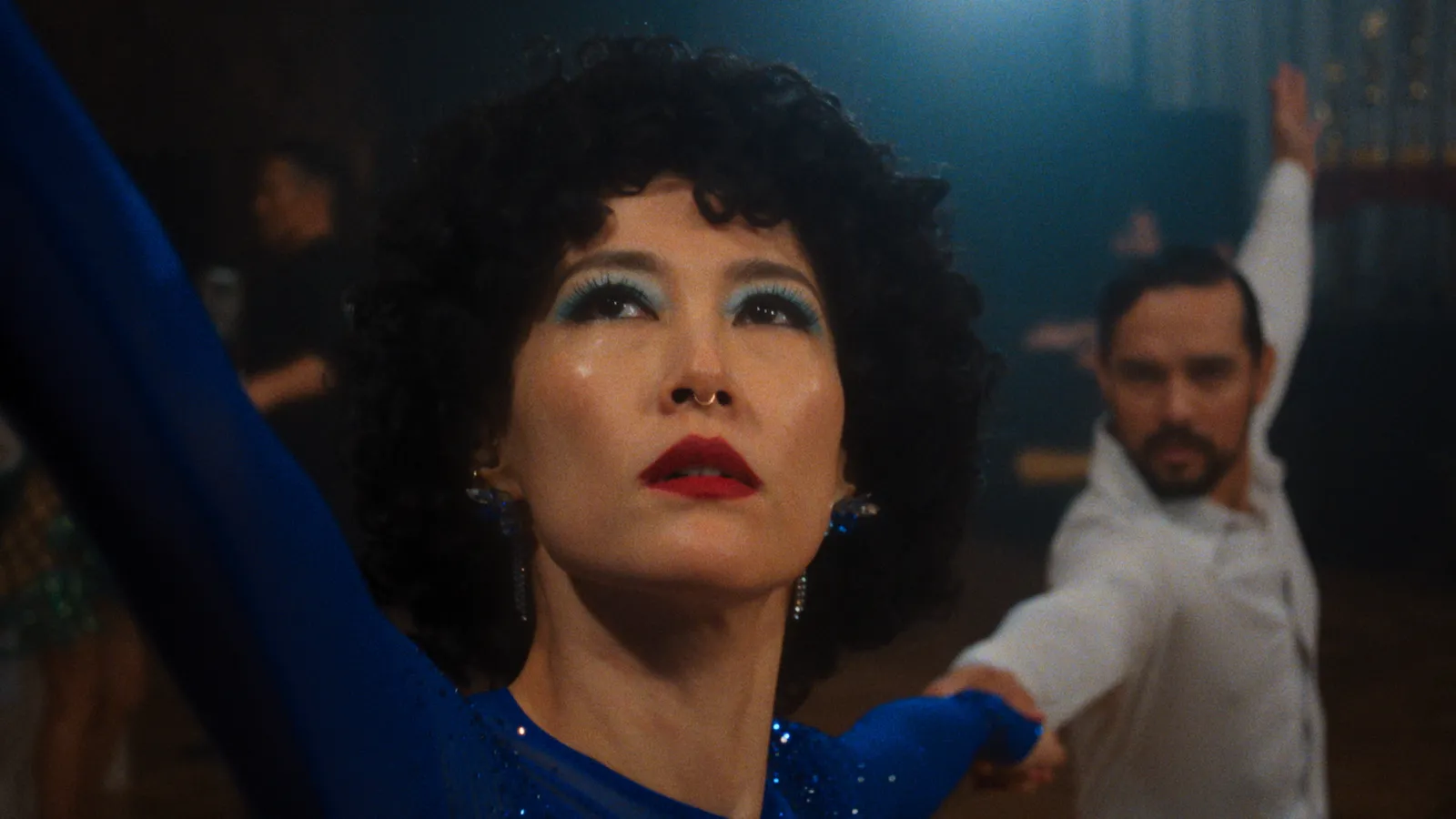
"The camera is dancing with them," Wladyka said. "We had a very special camera operator who was the Steadicam operator in there with them. And we decided to try something really crazy, which is put a zoom lens on the Steadicam. We can zoom, which was something that we committed to early on. We always felt like it was a fable so we also wanted to bring some of that fun language to the regular, grounded dramatic scenes as well. We had this fun motif where the music kind of moves the camera."
It is Kikuchi's acting that anchors everything. Even when Haru makes decisions that could force the audience to dislike her, Kikuchi is impossible to dislike. Wladyka calls himself a "creature of comfort," who enjoys working with people he had previous experience with. "I always try to keep those relationships going, so that when it's time for me to make my independent film I can just call them up and be like, 'Hey, do you want to be in this film?'" In this case, he'd previously worked with Kikuchi on the HBO series Tokyo Vice.
 Kristen Lopez
Initially, he was nervous to work with her on that series considering her body of work (which garnered her an Oscar nomination). That all disappeared while doing the first scene on Tokyo Vice. "We did this first scene, and there was no dialog. It was her just walking down the street carrying groceries, and we set up this dolly shot," he said. "We shot it, and I just turned to the DP and we were both like, 'Wow, she's amazing. She's not even doing anything. She's carrying groceries, and there's such a presence." The pair worked together across two seasons of the show, the whole time discussing plans to work on a feature together. "At the end I was like, 'I got this weird ballroom dancing [movie] inspired by my mom. Would you would you be interested in that?' And she's like, yeah. So, I pitched it to her, and she was immediately on board. I feel like she just understood the tone of it right away, and then we rewrote it with her in mind, basically."
There's a variety of great dance sequences in the movie, but the film's finale dance on a movie train – to the Cranberries's iconic "Dreams" – is astounding. No surprise, it was incredibly stressful to shoot. "Very stressful," he said. "I don't recommend it for anyone. It's very complex to shoot in Japan, in general. It's just a different type of system than shooting in the States. I had an amazing our Japanese producer, Mao Nagakura, who was a godsend. She knew what we needed to do to even have any hope of pulling this off. It first starts with her and the locations team months ahead of time, starting to figure out what train lines would allow us to do it. Then we would rehearse it in a space, not on the actual train, to get to get the vibe of it. When we had to actually shoot it on the day, we were on the train and it was going into Tokyo, so we would just have to do series of it, over and over again. The stakes were high and Rinko was getting into it, so each take it got sharper and sharper."
Ha-Chan, Shake Your Booty! is in theaters now.
If you liked this review, paid Film Mavens get the stuff I can't publish anywhere else:
- Access to all my paid content and exclusive series like:
 Kristen Lopez
 Kristen Lopez
- Shout outs on my newsletter when you join and whenever you have something you're launching.
- Included on my Gold Star Crew list
- Bi-Monthly Zoom Mixers where we can talk entertainment, get advice on journalism, and generally discuss the world.
- Access to our Discord server where we can chat about movies and entertainment. It's also where I host my yearly Golden Globes and Oscar watches.
- Participation in my new Film Maven Secret Santa Gift Exchange (launching November 2026), book clubs, and film discussion groups (launching later this year)